
Melting Sea Ice Draws Thousands of Giant Whales to East Greenland
| Lead Researcher | Prof Mads Peter Heide-Jørgensen, Greenland Institute of Natural Resources |
|---|---|
| Study Journal | Frontiers in Marine Science |
| Estimated Whales (Summer 2024) | 4,000 humpbacks, 6,000 fin whales, and 6,000 minke whales |
| Estimated Prey Consumption | At least 800,000 tonnes of fish and krill per summer season |
| Impacted Arctic Species | Narwhals and belugas face habitat loss and displacement |
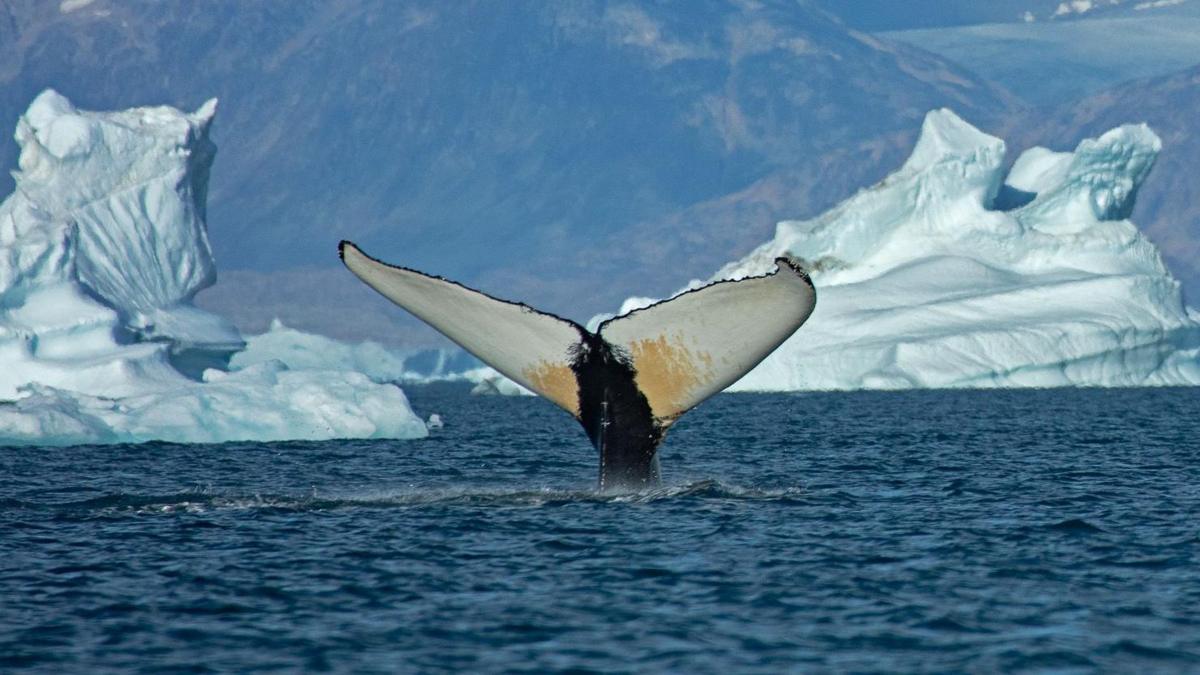
As rising global temperatures reduce sea ice off the eastern coast of Greenland, large baleen whale species are moving into newly accessible subarctic waters to feed during summer months, according to a decades-long research project published in the journal Frontiers in Marine Science.
The research documents how warming ocean temperatures and retreating ice barriers have enabled humpback, fin, and minke whales to establish new seasonal feeding grounds. Historically, dense ice cover prevented these large marine mammals from accessing coastal waters in East Greenland. Driven by rising water temperatures, fish populations have migrated northward into the region, providing an abundant food supply for arriving whales.
Led by Professor Mads Peter Heide-Jørgensen of the Greenland Institute of Natural Resources, the research team gathered data through multiple methods. Their findings combine ship-based observations, systematic aerial surveys conducted in the summers of 2015 and 2024, tracking data from 15 satellite-tagged whales, and accounts provided by local Inuit hunters. Heide-Jørgensen described the dramatic environmental transformation occurring along the eastern coastline as a “major ecological regime shift.”
Ship-based survey records illustrate the speed of the shift. No humpback whales were recorded in the region before 2006. Researchers logged seven humpback sightings in 2007, a number that grew to 150 ship-based sightings by 2024. For the summer of 2024, the study estimated that the Greenland Sea hosted approximately 4,000 humpback whales, 6,000 fin whales, and 6,000 minke whales. Scientists calculated that these three species consume a minimum of 800,000 tonnes of fish and krill during a single summer feeding season.
Heide-Jørgensen stated that the changes seen in eastern Greenland are “probably the most radical” recorded anywhere in the subarctic. However, the study notes it is unclear whether the influx reflects total population growth among these species or a geographical migration from other ocean areas. Marine experts consulted by the BBC expressed concern that the shift could involve whales relocating from West Greenland, where whale hunting takes place.
Although adaptable baleen species are benefiting from ice-free seas, endemic Arctic marine life faces increased hardship. Species adapted to colder ice-filled environments, including narwhals and belugas, are increasingly forced to share space or are being displaced entirely by the arriving whales. Heide-Jørgensen observed that while warming offers new possibilities for opportunistic species, “other species are losing their habitat.”
Background
Greenland, an autonomous territory within the Kingdom of Denmark, lies largely within the Arctic Circle, where marine ecosystems have historically relied on seasonal sea ice cover. Across recent decades, the Arctic region has warmed significantly faster than the global average, leading to widespread loss of polar ice.
Regulated whale hunting is practiced in parts of Greenland by indigenous Greenlandic communities under established management frameworks. Because hunting activities and quotas vary regionally, shifts in whale populations between eastern and western Greenland could carry implications for local communities and wildlife policy.

Leave a Reply