
Conservation Groups Urge Distance as Seals Travel Further Up River Thames

| Estimated Thames seal population | 3,500 seals |
|---|---|
| Species composition | 3,000 grey seals and 500 harbour seals |
| Farthest reported sighting inland | Windsor |
| Primary legal framework | Wildlife and Countryside Act 1981 |
Conservation organisations in the United Kingdom are urging the public to keep a safe distance from seals in the River Thames as the animals travel further inland. Wildlife advocates warn that approaching the marine mammals poses health risks to people and can trigger severe distress or fatal outcomes for the animals.
Inland Movements and Health Risks
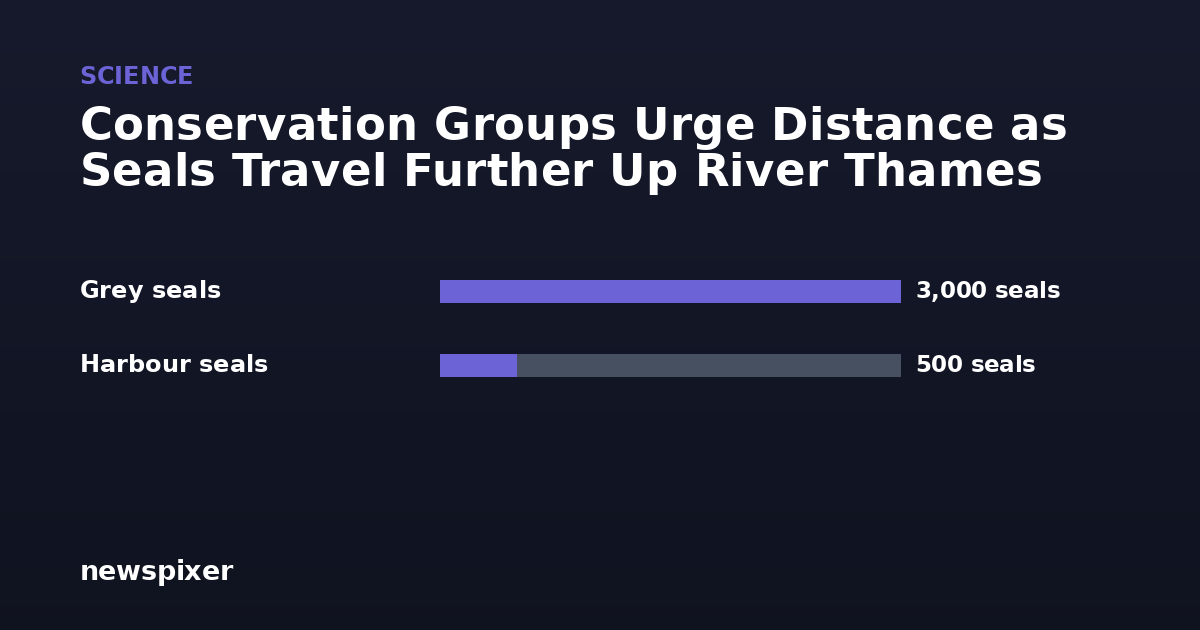
An estimated 3,500 seals reside along the River Thames, primarily gathering around the estuary east of London. The population consists of roughly 3,000 grey seals and 500 harbour seals. Gareth Richards of the UK Seal Alliance noted that seals move dynamically to locate food, traveling between 60 and 80 miles daily following fish stocks. Consequently, sightings have expanded further upriver, with individual seals reported as far west as Windsor.
Thames Seal Watch representative Emma Kelly cautioned that seals pose potential dangers to people, explaining that the animals “can bite and they carry zoonotic diseases” that can infect humans. Wildlife experts also warn that human intrusion severely impacts seal welfare. Intrusions from pedestrians, pets, and drones can cause mother seals to abandon pups, lead to energy depletion, or cause physical injuries when animals flee in panic.
The dangers facing urban seals were highlighted by the death of Marmalade, a harbour seal recognizable by her golden coat who frequently visited Greenwich and Rotherhithe. Marmalade died in May after contracting a parasitic disease. Following her death, volunteers placed flowers in the river and installed a commemorative plaque near the University of Greenwich.
Debate Over Legal Safeguards
Despite their presence in densely populated areas, neither harbour seals nor grey seals are explicitly protected from intentional or reckless disturbance under the Wildlife and Countryside Act 1981. In response, the UK Seal Alliance launched its “Give Seals Space” campaign in May, asking the government to grant the animals “with the legal protection they deserve.”
Addressing the calls for statutory changes, the Department for Environment, Food and Rural Affairs pointed to current legal provisions. A spokesperson for the department stated that existing regulations “make it an offence to take, injure, capture or kill a seal.”
Background
The River Thames estuary serves as an important habitat for marine wildlife in south-east England. While seal populations historically remained near eastern coastal outlets, changing ecological conditions and fish movements have led marine mammals to venture further into urbanized stretches of the river running through Greater London.


Leave a Reply