
Iran and Oman prepare Hormuz deal as U.S. holds back on secondary sanctions

TEHRAN/MUSCAT — Iran and Oman are moving closer to an agreement aimed at restoring safer commercial shipping through the strategically vital Strait of Hormuz, while the United States has so far stopped short of imposing the most aggressive secondary sanctions threatened against countries and companies trading with Iran.
The diplomatic movement comes as shipping through the strait remains heavily disrupted after months of conflict between Iran and the United States. The waterway is one of the world’s most important energy corridors, normally carrying roughly one-fifth of global oil and liquefied natural gas exports.
Iran and Oman said their foreign ministers had discussed a framework for creating a temporary navigational corridor through the Strait of Hormuz and launching a joint effort to clear mines from the waterway.
The two countries are also continuing technical negotiations over a permanent navigation corridor, future administration of the strait, information sharing and traffic management.
Iran and Oman move toward temporary shipping corridor
The proposed arrangement would provide a mechanism for commercial vessels to move through the strategic waterway while longer-term questions about its management are negotiated.
Omani Foreign Minister Badr Albusaidi said he hoped Iran and Oman would soon be able to announce the temporary corridor.
Iranian officials, however, have stressed that an agreement with Oman alone does not mean the strait will immediately return to normal.
Iranian Deputy Foreign Minister Kazem Gharibabadi said Tehran would continue to restrict military vessels and that commercial ships would be monitored as they seek to cross the waterway.
Iran has also demanded that Washington end its naval blockade and fulfill commitments contained in an earlier U.S.-Iran memorandum of understanding before the waterway can fully reopen.
U.S. takes tougher economic approach
The diplomatic developments coincide with a major shift in Washington’s strategy toward Tehran.
U.S. Treasury Secretary Scott Bessent has threatened an aggressive economic campaign against Iran, warning that countries and businesses helping Tehran could face consequences.
Washington has announced expanded sanctions targeting areas including Iran’s digital assets, technology, gold, aviation and shipping sectors. The measures have affected entities in several countries, including the United Arab Emirates, China, Hong Kong, Singapore and Europe.
At the same time, the United States has so far held back from applying the full force of secondary sanctions against major foreign financial institutions suspected of facilitating Iran’s oil trade.
Bessent has indicated that Washington wants to give businesses a limited period to adjust before potentially expanding the sanctions campaign. That approach could provide some room for diplomacy while the Hormuz negotiations continue.
Why the Strait of Hormuz matters
The Strait of Hormuz connects the Persian Gulf with the Gulf of Oman and the wider Arabian Sea.
Its narrow geography makes it one of the world’s most important maritime chokepoints. Before the current conflict, enormous volumes of crude oil, petroleum products and liquefied natural gas moved through the waterway every day.
Disruptions have therefore had an immediate effect on energy markets, shipping costs and insurance premiums.
Oil prices have fallen in recent days as investors have become more optimistic about the possibility of an agreement and a gradual restoration of shipping through the strait.
Iran says the strait is not fully open
Despite the diplomatic progress, Tehran has made clear that it does not consider the waterway fully reopened.
Gharibabadi said Iran would not allow military vessels to pass through the strait and argued that the United States must first meet its commitments.
Iran has also disputed U.S. claims that mines in international waters have already been removed or detonated. Tehran warned that American minesweepers entering areas it considers under its control could face attack.
That disagreement remains one of the major obstacles to a broader settlement.
Iran and Oman discuss future control of Hormuz
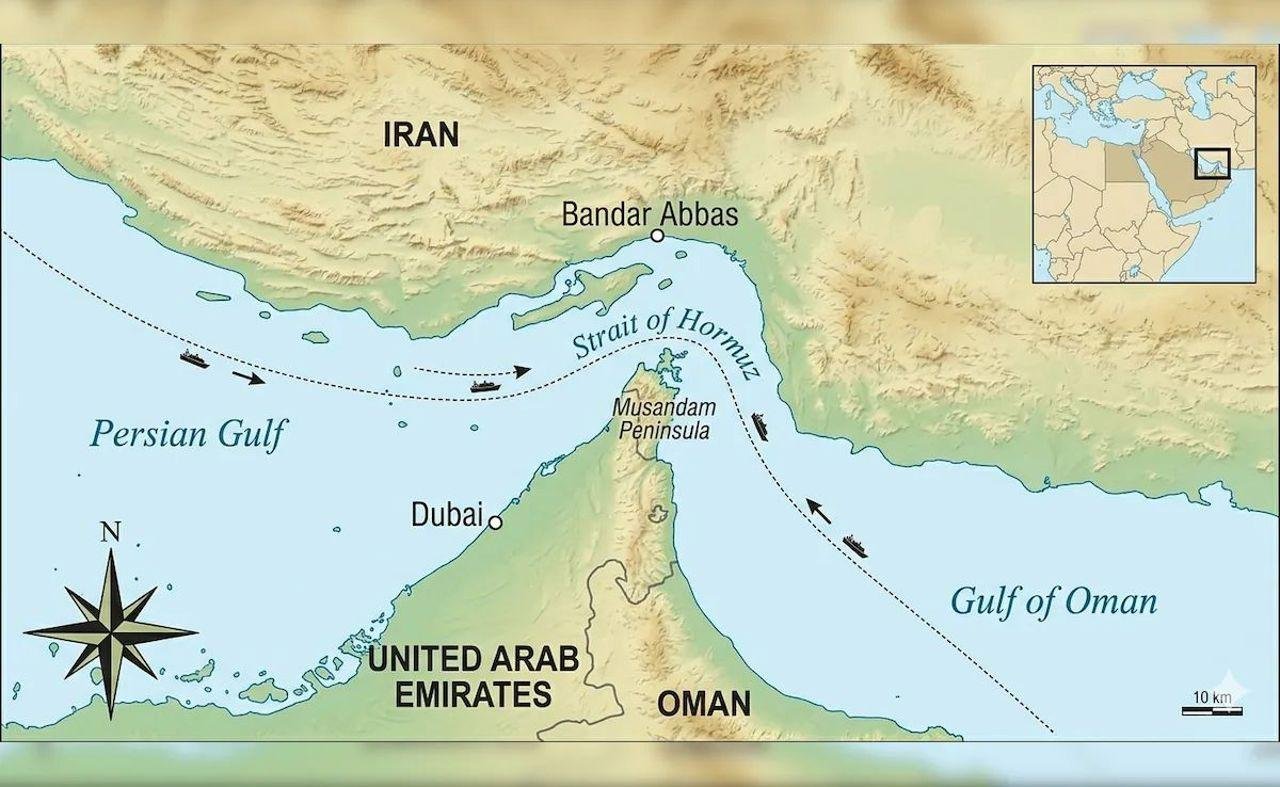
Iran’s Revolutionary Guards also said Wednesday that Tehran and Muscat had reached agreements concerning their respective shares of the Strait of Hormuz and its revenues.
The statement was reported by Iran’s semi-official Tasnim news agency. Reuters reported that an Iranian Revolutionary Guards spokesperson blamed U.S. interference for delays in negotiations between Iran and Oman.
The issue of future administration is likely to be one of the most sensitive parts of any permanent arrangement.
For now, Iran and Oman appear focused on establishing a temporary system that can allow commercial traffic to resume while the broader dispute is negotiated.
What happens next?
The immediate test will be whether Tehran and Muscat can finalize the temporary corridor and establish a workable system for shipping, mine clearance and communication.
A successful arrangement could reduce the risk of further disruption to global energy supplies and ease pressure on oil prices.
But the United States remains a critical part of the equation. Iran has linked the full reopening of Hormuz to Washington’s military and economic actions, while the Trump administration continues to demand greater pressure on Tehran.
For international energy markets, the difference between a temporary corridor and a fully functioning Strait of Hormuz remains significant.
The coming days could determine whether the latest Iran-Oman negotiations become a first step toward reopening one of the world’s most important shipping routes—or another temporary agreement in a conflict that remains unresolved.


Leave a Reply