
Kazakhstan’s Ruling Party Wins Parliamentary Election Following Constitutional Reforms
| Ruling Party Vote Share | Adilet party won between 70% and 72% of the vote according to exit polls. |
|---|---|
| Legislative Changes | Senate abolished to create a 145-seat single-chamber assembly known as the Kurultai. |
| Opposition Status | Genuine opposition parties were banned; only seven state-approved parties competed. |
| Economic Context | Vote took place amid 10.2% inflation and rising taxes. |
| Press Freedom Concerns | Election coincided with reporter house arrests and charges against 10 independent journalists. |
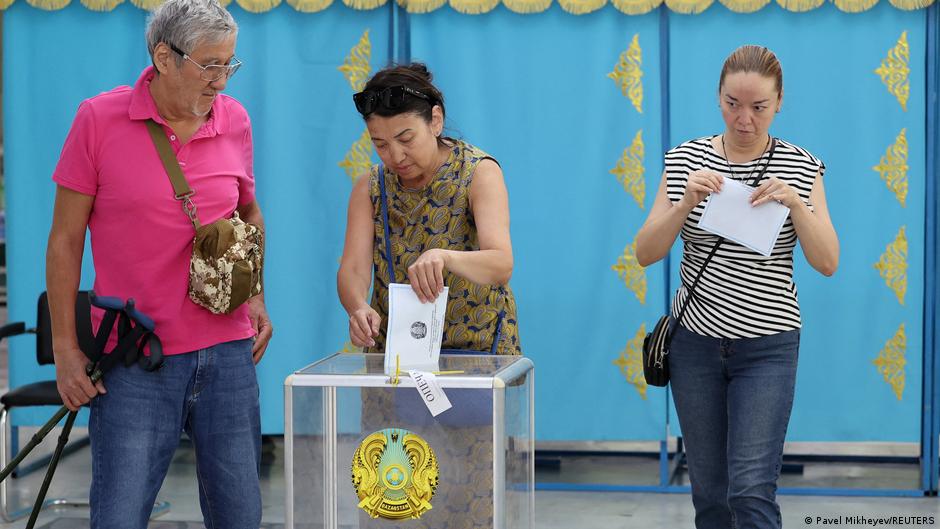
Kazakhstan’s governing Adilet party secured a decisive victory in Sunday’s election for the nation’s new single-chamber parliament, according to exit polls broadcast on state television. Three separate poll results showed Adilet capturing between 70% and 72% of the vote. In addition, exit polls indicated that four smaller political groups loyal to President Kassym-Jomart Tokayev successfully gained seats in the new assembly.
The parliamentary vote was triggered following the adoption of a new constitution in March, which eliminated the country’s former Senate to establish a unicameral legislature called the Kurultai. The 145-seat assembly draws its name from historical medieval councils of the region’s nomadic past. While proponents maintain that the restructured body grants parliament a greater voice in national decision-making, critics contend that the institutional overhaul is primarily intended to solidify the president’s political authority.
Electoral participation was closely regulated by state authorities. Only seven state-approved political parties were permitted to nominate candidates for the 145 parliamentary seats, whereas genuine opposition parties remained entirely banned from participating in the vote.
The balloting occurred during a period of economic pressure across the strategically located Central Asian country. Annual inflation is currently hovering around 10.2%, and recent tax increases have raised widespread public concern. Government officials are particularly wary of renewed public instability, seeking to avoid a recurrence of the January 2022 cost-of-living unrest that resulted in the deaths of 238 protesters and police officers.
Alongside economic strain, the election took place amid severe restrictions on media freedom. Multiple reporters were under house arrest during the voting period, and state prosecutors have initiated formal criminal proceedings against ten independent journalists and bloggers.
In statements delivered on Friday, Tokayev defended his reform program, describing the parliamentary contest as “perhaps the most interesting in our country’s history.” The 73-year-old leader justified the structural changes as necessary responses to “unprecedented geopolitical tensions and mounting global challenges” facing the nation.
Internationally, Tokayev has maintained a careful balance between major power blocs. Since Western nations imposed economic sanctions on Russia over its invasion of Ukraine, Kazakhstan has sought to preserve long-standing ties with Moscow while simultaneously cultivating strategic relationships with China, the European Union, and Western allies.
Background
President Kassym-Jomart Tokayev assumed power in 2019, succeeding long-serving authoritarian leader Nursultan Nazarbayev, who had governed Kazakhstan for three decades following the collapse of the Soviet Union. Tokayev’s background includes service as a Soviet official, a Kazakh diplomat, and a senior official at the United Nations.
In March, Kazakh voters approved a constitutional referendum with 87% support. Although Tokayev has stated that he does not intend to serve beyond his current term, the constitutional changes reset presidential term limits, making him legally eligible to run for another seven-year term in 2029.


Leave a Reply