
NASA calls off mission to rescue Swift gamma-ray observatory
NASA Calls Off Mission to Rescue Swift Gamma-Ray Observatory
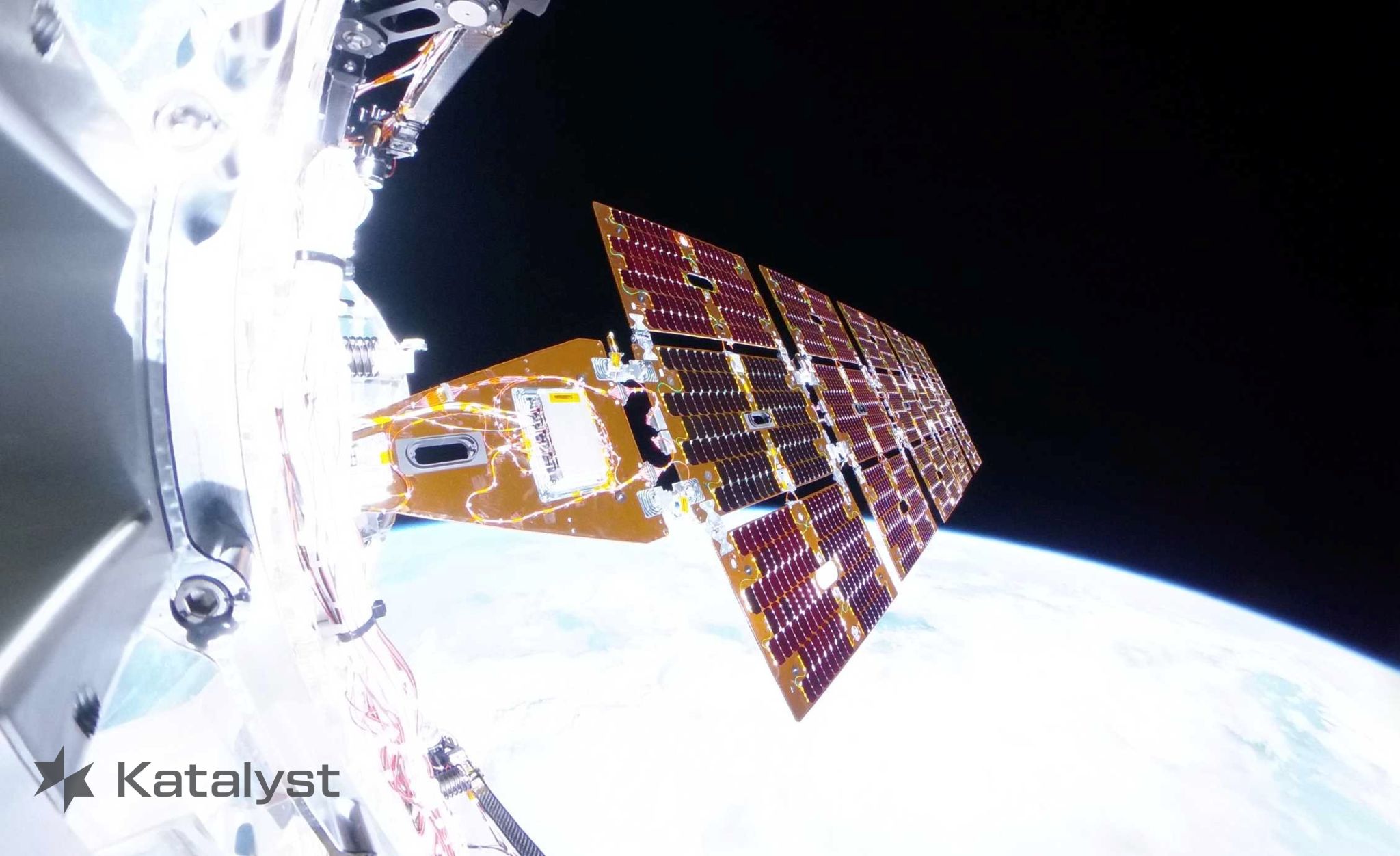
NASA has abandoned an ambitious attempt to save its aging Swift space observatory after technical problems with the spacecraft sent to perform the rescue made the mission impossible. The telescope is now expected to eventually reenter Earth’s atmosphere.
NASA and Katalyst Space Technologies announced on August 19 that the LINK spacecraft would no longer attempt to capture and raise the orbit of NASA’s Neil Gehrels Swift Observatory. The decision came after an unresolved attitude-control problem prevented LINK from operating as planned.
The failed rescue marks a disappointing end to an ambitious effort designed to extend the life of one of NASA’s most productive astrophysics missions.
Why NASA Tried to Save Swift
The Neil Gehrels Swift Observatory has been orbiting Earth since 2004, far exceeding its original two-year mission.
Swift was designed to rapidly detect and study gamma-ray bursts, some of the most energetic explosions known in the universe. Its instruments can observe these events in gamma-ray, X-ray, ultraviolet and visible wavelengths, allowing scientists to quickly investigate violent cosmic events.
The observatory does not have a propulsion system capable of significantly raising its orbit. Atmospheric drag, although extremely weak at Swift’s altitude, has gradually caused the spacecraft’s orbit to decline.
Increased solar activity has made the problem worse by expanding Earth’s upper atmosphere and increasing drag on satellites in low Earth orbit.
The LINK Rescue Mission
NASA partnered with Arizona-based Katalyst Space Technologies on an unusual commercial servicing mission.
The company’s LINK spacecraft launched on July 3, 2026, with the goal of approaching Swift, capturing the observatory with robotic arms and moving it into a higher orbit.
The plan called for Swift’s altitude to be raised from roughly 216 miles (347 kilometers) to about 373 miles (600 kilometers). If successful, the maneuver could have extended Swift’s scientific life by several years.
NASA awarded Katalyst a contract worth approximately $30 million for the effort.
The mission was considered a major test of commercial spacecraft servicing technology and could have demonstrated a new way to extend the lives of valuable satellites already in orbit.
Problems Hit the Rescue Spacecraft
The rescue effort began running into trouble soon after LINK reached orbit.
The spacecraft developed serious attitude-control problems, causing it to spin in an uncontrolled manner. Engineers attempted to regain control through software updates and other troubleshooting measures.
Although some progress was made, the spacecraft’s control problems could not be resolved sufficiently to allow it to safely capture Swift.
NASA and Katalyst ultimately concluded that LINK could not complete the planned orbital boost.
NASA said the rescue portion of the mission would therefore be abandoned.
LINK Will Still Perform Space Operations
The mission is not being completely terminated.
Rather than attempting the dangerous capture, LINK will continue performing rendezvous and proximity operations around Swift where possible. These activities are intended to demonstrate navigation and servicing technologies that could be useful for future missions.
NASA said the remaining work could provide valuable information for future efforts to repair, refuel or move spacecraft in orbit.
The experience could prove particularly useful as the number of commercial and government satellites in Earth orbit continues to grow.
Swift’s Final Chapter
Without an orbital boost, Swift’s orbit will continue to deteriorate.
NASA and other reports indicate that the observatory is expected to eventually fall into Earth’s atmosphere and burn up during reentry later in 2026.
Despite the failed rescue, Swift has already delivered far more than originally expected.
For more than two decades, the observatory has helped astronomers identify gamma-ray bursts and rapidly direct other telescopes toward their sources. Its ability to respond quickly to transient cosmic events has made it an important tool for time-domain astronomy.
Swift Has Returned to Science Operations
There is still some scientific life left in the observatory.
After scaling back operations earlier in the year to reduce atmospheric drag and prepare for the attempted orbit boost, NASA restarted two of Swift’s science instruments on August 26.
The observatory’s X-ray Telescope and Ultraviolet/Optical Telescope have resumed observations. NASA says the Burst Alert Telescope remains offline as engineers manage the spacecraft’s remaining operational resources.
That means Swift can continue producing scientific observations while it remains in orbit.
A Risky Mission With Lessons for the Future
Although the rescue attempt failed, NASA has described the project as an important experiment in rapid commercial space innovation.
The mission required Katalyst to develop and launch LINK on an unusually aggressive schedule. The spacecraft’s difficulties demonstrate how challenging autonomous rendezvous and satellite servicing can be, particularly when dealing with an aging spacecraft and a narrow operational window.
NASA Administrator Jared Isaacman said the agency was willing to accept calculated risks because of the potential scientific and technological benefits of the mission.
The knowledge gained from LINK could help engineers design more reliable spacecraft capable of servicing satellites in the future.
The End of an Extraordinary Mission
Swift’s expected reentry will close the chapter on one of NASA’s longest-running astrophysics missions.
The observatory was built to operate for only a few years but continued observing the universe for more than two decades. Its discoveries have helped scientists better understand some of the most powerful explosions and rapidly changing objects in space.
The failed rescue is a setback, but it also represents an important test of a technology that could become increasingly valuable as spacecraft remain in orbit longer and satellite servicing becomes more common.
For now, Swift continues watching the universe while it still can — collecting observations from its declining orbit and adding to a scientific legacy that has lasted far beyond its original mission.



Leave a Reply