
Rescued Parrot Eggs Hatch in South Africa Following Airport Smuggling Arrest
| Suspect | 50-year-old Thai national |
|---|---|
| Location | OR Tambo International Airport, Johannesburg, South Africa |
| Seized Items | 50 suspected endangered parrot eggs carried in a homemade incubator bag |
| Current Care | National Zoological Garden, Pretoria (hatching and intensive chick care) |
| Potential Penalties | Up to 10 million rand fine ($626,000) and up to 10 years imprisonment |
| Related Incident | July arrest of a 23-year-old Thai national with 418 parrot eggs at the same airport |
South African authorities have intercepted 50 suspected endangered parrot eggs and arrested a 50-year-old Thai national at the country’s primary airport in Johannesburg. According to the Department of Forestry, Fisheries and the Environment (DFFE), the individual was apprehended at OR Tambo International Airport while attempting to transport the eggs in hand luggage. Officials said the eggs were being carried inside a specialized makeshift heating container described as a homemade incubator bag.
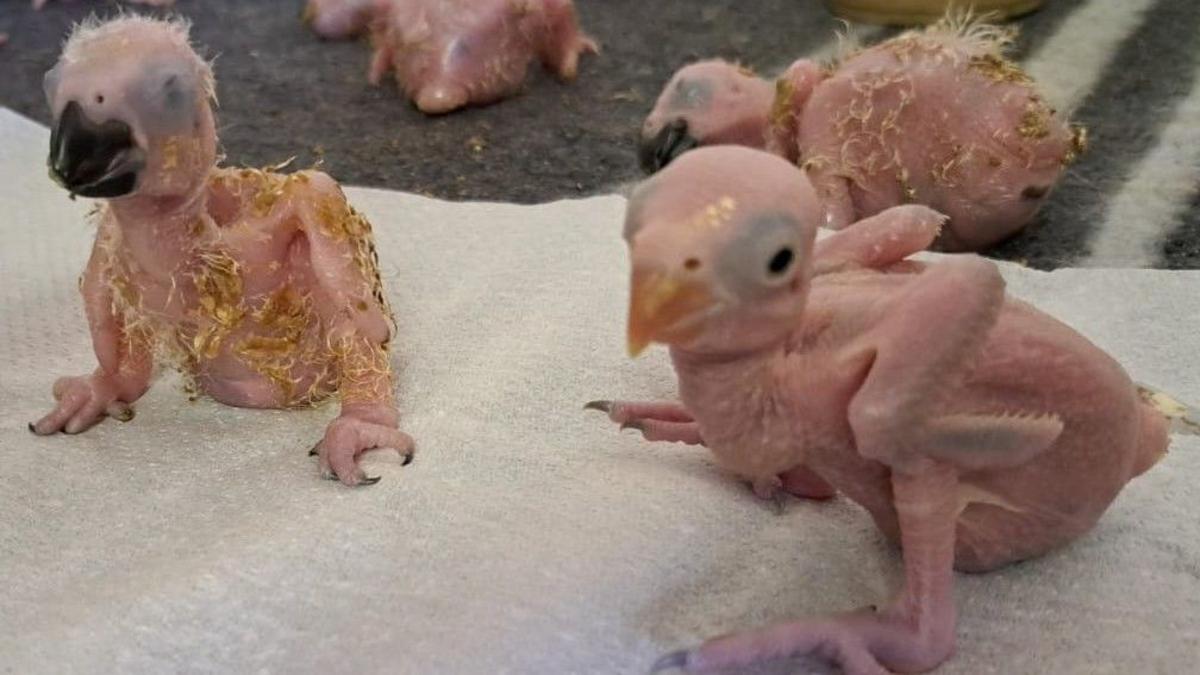
Following the seizure, the eggs were immediately relocated to the National Zoological Garden in Pretoria, the administrative capital. Expert care staff at the facility have been working continuously to incubate the eggs. Officials reported that several of the rescued eggs have since hatched, with the newborn chicks placed under constant care designed to increase their chances of survival.
Initial findings from environmental investigators suggest that the seized eggs belong to a wild bird species protected under the Convention on International Trade in Endangered Species of Wild Fauna and Flora, an international treaty governing the trade of vulnerable wildlife. The operation was carried out jointly by the DFFE, several divisions of the South African Police Service, and the Green Scorpions, a specialized unit tasked with enforcing environmental laws.
If convicted under South Africa’s environmental protection statutes, the suspect could face severe penalties, including a fine of up to 10 million South African rand (approximately $626,000 or £461,000), a prison sentence of up to 10 years, or a combination of both.
The arrest marks the second notable seizure of smuggled bird eggs at Johannesburg’s main airport this year. In July, law enforcement officers detained a 23-year-old Thai national who was caught trying to transport 418 parrot eggs through the same facility. The DFFE highlighted that these back-to-back arrests demonstrate the increasing sophistication of international wildlife smuggling syndicates targeting bird populations.
Environmental authorities warned that the unlawful gathering and trafficking of wild bird eggs presents a grave threat to global avian biodiversity and animal welfare. Smugglers commonly transport eggs in improvised containers under conditions that subject developing embryos and newly hatched chicks to severe physical stress and high mortality risks.
South African Environment Minister David Maynier commended the law enforcement agencies and specialized units involved in the interception. Praising the joint effort, Maynier stated that “illegal wildlife trafficking can only be challenged by a co-ordinated defence of our natural heritage.” He also extended recognition to the team at the Pretoria zoo for their ongoing efforts to incubate the eggs and care for the surviving chicks.
Background
South Africa is recognized globally as one of the most biologically diverse countries, making its native fauna and flora a frequent target for organized wildlife trafficking rings. Criminal syndicates often exploit the country’s transport infrastructure to move poached animals and animal parts—including elephants, pangolins, and rare plant species—onto the international black market.
To combat this ongoing issue, South Africa implemented a comprehensive national strategy six years ago aimed at enhancing cooperation across state departments. The initiative coordinates efforts among law enforcement agencies, environmental compliance teams, border customs, prosecutors, and international conservation organizations to disrupt and dismantle transnational trafficking operations.


Leave a Reply