
Rights Groups Decry Intensifying Crackdown on Tunisia’s Civil Society
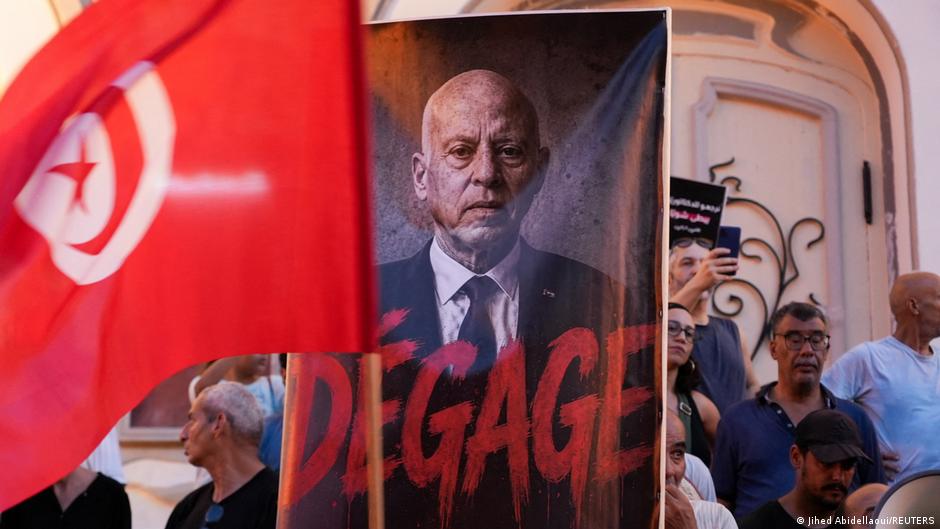
| Rights Report | Human Rights Watch reported that Tunisian authorities are systematically attempting to shut down civil society groups through prosecutions and suspensions. |
|---|---|
| Government Position | President Kais Saied denies authoritarianism, maintaining that state actions target corruption and foreign interference. |
| Public Restlessness | Protests erupted in Tunis during July and August over worsening public service outages and political suppression. |
| Demographic Divide | Survey data shows 49 percent of Tunisians aged 18 to 39 trust civil society, compared to 32 percent among those aged 40 and older. |
Non-governmental organizations and human rights advocates in Tunisia report facing increasing state pressure, including financial audits, legal prosecutions, and activity suspensions. A recent report by Human Rights Watch concluded that the administration of President Kais Saied is attempting to eliminate independent civic organizations in the North African country. Authorities have frequently leveled accusations of financial misconduct, such as money laundering, against civic groups that voice criticism of state policies.
Rights workers indicate that the government’s measures have created widespread fear, prompting many individuals and groups to self-censor or refrain from working on politically sensitive issues. Speaking to reporters, Bassam Khawaja of Human Rights Watch described the situation as “a total crackdown on civil society in Tunisia.” Human rights activist Messaoud Romdhani noted that many organizations have been left in shock as legal actions lead to immediate operational halts. An anonymous activist also told reporters that pervasive uncertainty has become a form of pressure.
President Saied has consistently rejected charges of authoritarian rule. He maintains that state actions are necessary to combat corruption, preserve national sovereignty, and safeguard democracy. Saied has also accused foreign-funded entities and internal critics of orchestrating disruptions to destabilize the nation. The Tunisian presidency did not respond to requests for comment regarding the allegations.
Despite legal pressure on organized groups, public demonstrations have periodically surfaced in the capital city of Tunis. On July 25, thousands gathered to mark five years since the president expanded his executive authority, protesting against deteriorating economic conditions and political stagnation. Further demonstrations occurred in late August under the coordination of Nafas, a civic coalition established in May to advocate for basic necessities such as water, electricity, and food.
Protesters have voiced frustration over recurrent disruptions to electricity and municipal water supplies. President Saied has dismissed these outages as intentional acts of sabotage designed to incite public anger and spread disinformation. Meanwhile, political analysts note that while public discontent over economic failure has eroded support for the administration, recent street protests have not reached a scale capable of unseating the leadership.
The political tension coincides with shifts in public opinion across different demographic groups. Research published by the Arab Barometer organization highlights a widening gap between younger and older citizens. Survey results show that 49 percent of Tunisians between the ages of 18 and 39 express trust in civil society institutions, compared to 32 percent among citizens aged 40 and older. Arab Barometer director Michael Robbins noted that trust among older residents had dropped sharply over a two-year period, whereas views among younger Tunisians remained relatively stable.
Background
Tunisia was widely viewed as the primary democracy to emerge from the 2010–2011 Arab Spring uprisings, which ended the rule of long-time President Zine El Abidine Ben Ali. President Kais Saied won election in 2019. In July 2021, Saied dissolved parliament and assumed broad executive powers. Since that shift, opposition figures, journalists, and independent watchdog organizations have faced heightened legal actions and detentions.



Leave a Reply