
Tokyo’s Shinjuku ward to ban short-term tourist rentals

| Location | Shinjuku ward, Tokyo, Japan |
|---|---|
| Impacted properties | Approximately 2,000 short-term rentals |
| Resident complaints | Over 1,300 in 12 months to March |
| Proposed annual rental limit | 120 days per year |
Tokyo’s Shinjuku ward is moving to ban short-term visitor accommodation in residential neighborhoods, near schools, and around cultural sites following an influx of local complaints. The proposed restrictions will affect roughly half of the district’s registered private lodgings to address ongoing friction between residents and tourists. Ward officials intend to gather public feedback next month before formally submitting ordinance changes early next year.
Rising friction and resident complaints
Local authorities reported receiving more than 1,300 complaints from residents during the 12 months ending in March. Reported issues centered on visitors mismanaging household trash, creating excessive noise, smoking in prohibited outdoor spaces, and trespassing on private property.
Shinjuku currently hosts 3,775 registered private lodgings, known as minpaku, which is the highest concentration of any district in Japan. The overall number of short-term rental properties in the ward has nearly tripled since 2022.
Municipal officials determined that temporary license suspensions for individual problematic property owners failed to reduce overall disruption. A ward representative told the Japan Times that despite taking action against non-compliant operators, “the number of complaints remains the same.”
Scope of the proposed restrictions
Under the drafted municipal ordinance, short-term private lodgings will be prohibited in designated residential districts, as well as in areas surrounding educational institutions and historic landmarks. The Mainichi Shimbun reported that the measure is projected to close up to 2,000 private rental units, representing about half of Shinjuku’s total inventory.
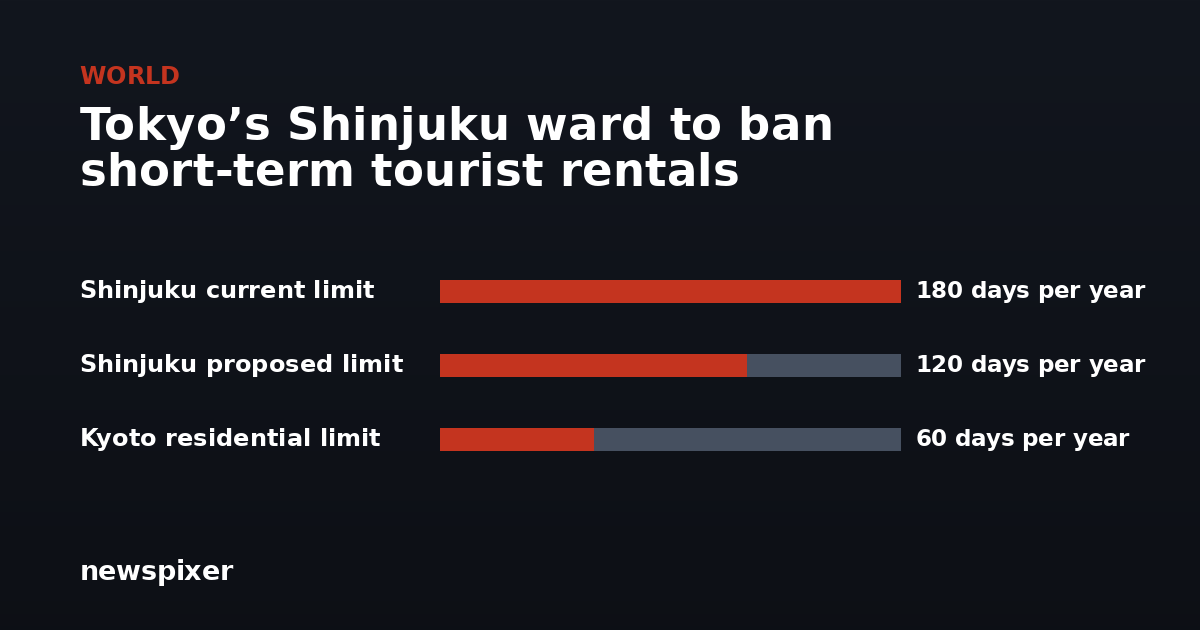
Alongside the geographic bans, local authorities intend to lower the maximum allowed operating period for private rentals in residential zones from 180 days to 120 days per year. Public consultation on the proposed changes will open next month, with official legislative amendments expected to go before the local council in February.
Industry response and local impact
The proposed ordinance will directly affect listings on rental platforms such as Airbnb. A spokesperson for Airbnb informed the Guardian that while the company recognizes local community concerns, a complete prohibition across residential zones would penalize responsible hosts while leaving illegal, unregistered operators unaddressed.
Shinjuku has a permanent resident population exceeding 350,000. The ward is home to major commercial centers, including the Kabukicho entertainment district, alongside the busiest train station in the world.
Background
The move by Shinjuku comes amid broader measures across Japan to manage unprecedented volumes of foreign tourism. Last year, a record 42 million international travellers visited the country, generating 9.5 trillion yen ($62 billion) in total spending. The national government has set a target to attract 60 million annual visitors by 2030, a goal that critics warn could intensify overcrowding and strain local infrastructure.
Other major Japanese destinations have previously implemented strict operational limits on private rentals. In Kyoto, short-term lodgings in residential neighborhoods are restricted to operating 60 days per year, limited exclusively to the low-demand season between January and March. Quoted by the Asahi Shimbun earlier this year, Kyoto Mayor Koji Matsui stated that city officials “need to go further” to prevent local communities from breaking down.
Similar restrictions have been introduced near landmark natural sites. Local authorities surrounding Mount Fuji recently introduced climbing fees and visitor limits to manage crowd numbers. In February, the neighboring town of Fujiyoshida canceled its spring cherry blossom festival, citing persistent disruption from visiting crowds.




Leave a Reply