
Trump Threatens Severe Penalties for Countries Doing Business With Iran
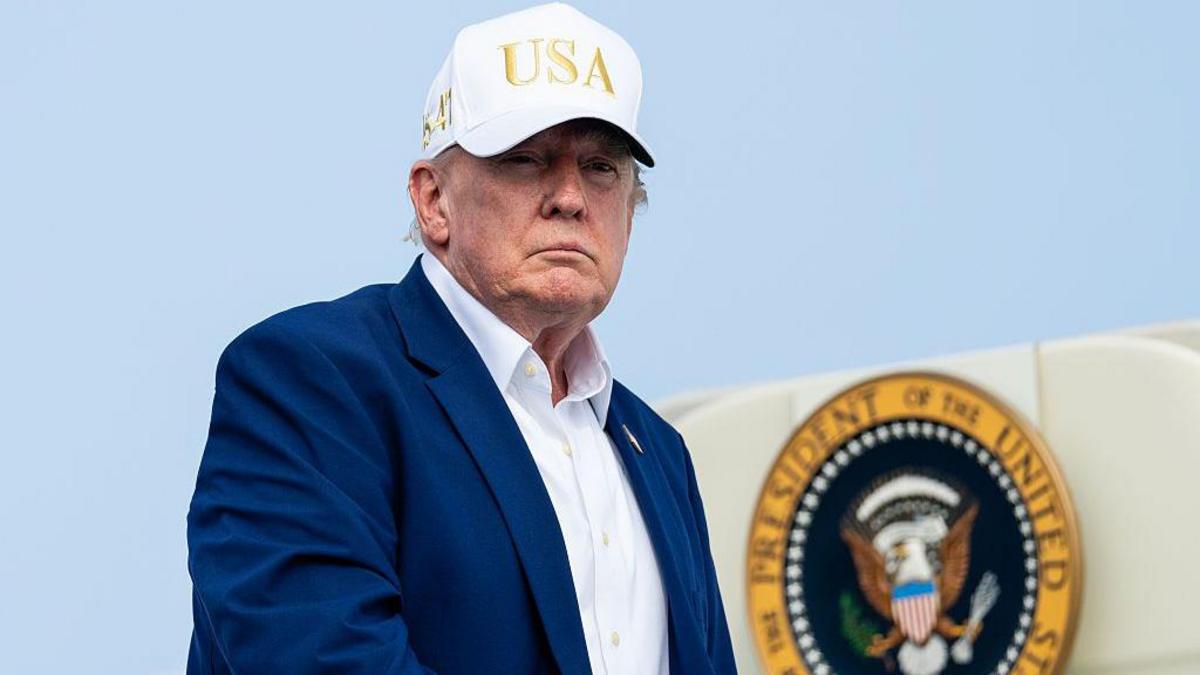
| U.S. Threat | President Trump announced an "economic D-Day" targeting Iran and any nation or business providing assistance to Tehran. |
|---|---|
| Targeted Operations | The measures target illicit financial and trade channels, including oil smuggling, exchange houses, ship registries, and front companies. |
| Diplomatic Status | A 60-day ceasefire expired on Monday without a diplomatic resolution to the conflict launched by the U.S. and Israel in February 2026. |
| Gulf Developments | The UAE cut all economic ties with Iran following a missile incident, while Iran warned Gulf states against aiding the U.S. military. |
U.S. President Donald Trump has announced plans to launch sweeping economic penalties aimed at Iran and any third-party country, business, or financial institution that continues to conduct commercial activity with Tehran.
Writing on his Truth Social platform on Wednesday evening, Trump termed the planned initiative “economic D-Day” and called it “the most crushing economic operation ever taken against any country.” He issued a broad warning that any nation allowing its airports, businesses, financial institutions, or government bodies to assist Tehran would encounter severe penalties. Specifically targeting shadow financial networks, Trump stated that practices such as oil smuggling, swap lines, cash transfers, exchange houses, ship registries, and front companies must stop immediately.
The statement comes shortly after a 60-day ceasefire between the warring parties expired on Monday without achieving a permanent diplomatic resolution to the military conflict launched by the United States and Israel in late February. Iranian Foreign Minister Abbas Araghchi responded to the statement on social media, dismissing Trump’s comments as “a diversion” from domestic economic issues in the United States and cautioning that escalating economic pressure would generate further hostility from the Iranian public.
The escalated rhetoric follows actions taken by key Middle Eastern nations. On Tuesday, the United Arab Emirates declared it was terminating all economic and financial connections with Iran. The decision followed an incident reported by the UAE defense ministry, in which two Iranian ballistic missiles targeted maritime traffic before falling into the sea. Iranian entities have historically utilized exchange houses and shell companies operating within Dubai’s financial hub to execute international money transfers. Following the UAE’s move, Iran’s armed forces warned neighboring states in the Gulf region that providing assistance to U.S. forces would be viewed as direct collusion.
While Trump did not explicitly identify target nations beyond Iran in his post, Chinese entities serve as the largest consumers of Iranian crude exports. Washington previously introduced sanctions against several privately owned Chinese oil processing facilities, known as teapot refineries, located in Shandong province. China’s Ministry of Commerce previously condemned those actions, stating that the U.S. restrictions violated international law and would not be respected or enforced.
The U.S. administration is also reportedly engaging in coercive diplomacy with other regional partners. According to reports, Trump threatened potential military strikes against Oman, a long-standing U.S. ally, should it interfere with Washington’s direct negotiations with Tehran. Oman and the U.S. have conducted parallel discussions with Iranian representatives to reopen the Strait of Hormuz to commercial shipping traffic.
Background
The United States and Israel initiated military operations against Iran in late February 2026. In April, the U.S. Treasury Department and the Pentagon launched Operation Economic Fury, combining economic sanctions on foreign entities doing business with Iran alongside a naval blockade intended to disrupt Iranian energy exports and weaken Tehran’s warfighting capacity.
During the war, Iran’s actions to restrict maritime transit through the Strait of Hormuz have disrupted global energy shipments and elevated fuel prices worldwide. Around 20% of global crude oil and liquefied natural gas typically moves through the strategic waterway. Elevated energy costs have created political pressure on the U.S. administration regarding consumer expenses ahead of the U.S. midterm elections scheduled for November 2026.


Leave a Reply