
Apple Finally Folds: iPhone Duo Price, Specs, and Every Feature You Need to Know
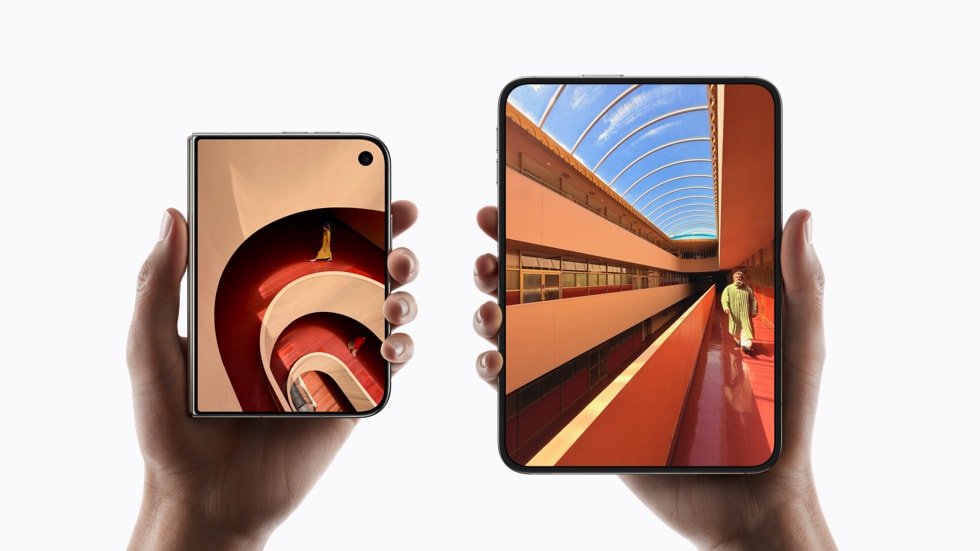
Two screens, one hinge, and a $1,999 price tag. Here’s everything worth knowing about Apple’s first foldable iPhone.
After years of leaks and endless debate over whether it would be called the “iPhone Fold” or “iPhone Ultra,” Apple has finally pulled back the curtain. At its September 9, 2026 event, the company unveiled the iPhone Duo, its first foldable smartphone. CEO John Ternus called it “the most transformational change to iPhone since the original.”
That’s a bold claim, and the price is just as bold. Here’s what you actually get.
iPhone Duo Price: How Much Does It Cost?
The iPhone Duo is the most expensive iPhone Apple has ever sold. In the U.S., it comes in four storage options:
| Storage | Price (U.S.) |
|---|---|
| 256GB | $1,999 |
| 512GB | $2,199 |
| 1TB | $2,599 |
| 2TB | $3,199 |
The base model costs $800 more than the iPhone 18 Pro and $700 more than the iPhone 18 Pro Max. Apple offers financing at $83.29 per month over 24 months, and U.S. buyers can lease through the Apple Upgrade program from $57.99 per month. Note that there’s no power adapter in the box, only a USB-C cable.
Release Date and Availability
Pre-orders open on Friday, October 16, and the phone arrives on Friday, October 23 in more than 70 countries and regions, including the U.S., UK, Canada, Australia, India, Japan, China, Malaysia, Singapore, and the UAE. Another 28 countries follow on October 30.
Design: Thin, Titanium, and Tough
Open the iPhone Duo and you’re holding the thinnest iPhone Apple has ever made. Close it, and it shrinks to roughly passport size, small enough for a pocket and comfortable in one hand.
The frame is grade 5 titanium polished to a mirror finish, with a 3D-printed hinge cover in a contrasting matte texture. Ceramic Shield protects the back, while Ceramic Shield 2 on the front offers three times the scratch resistance of the previous generation. It’s also IP68 rated for water and dust.
The hinge, built from more than 100 individual parts, keeps the display flat when open, and a magnet array gives it a satisfying, secure close.
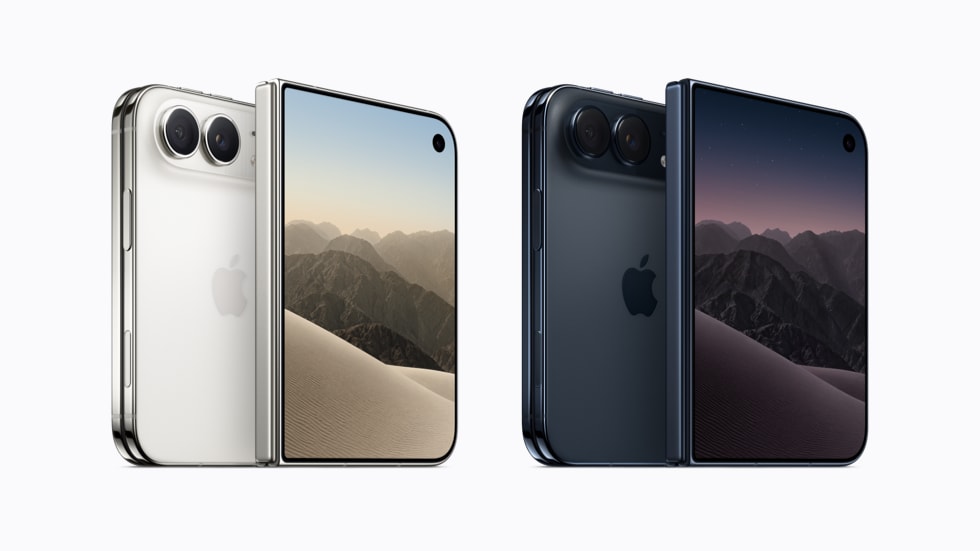 iPhone Duo comes in Star White and Night Sky. Image: Apple
Color choices are kept simple: Star White and Night Sky.
Two Displays, One Seamless Experience
This is where the “Duo” name earns its keep. The 5.4-inch outer display gives you about 90% of the screen area of an iPhone 18 Pro. Unfold the phone and the 7.6-inch inner display is 50% larger than the iPhone 18 Pro Max, the biggest screen ever on an iPhone.
Both screens share the same aspect ratio, so apps don’t awkwardly stretch when you open the phone; content simply scales up. Both support ProMotion, Always On, and up to 3,000 nits of peak outdoor brightness. The inner screen adds a nano-texture matte finish that cuts glare and hides the crease, plus an under-display FaceTime camera. Apple Pencil (USB-C) support arrives later this year.
One notable change: there’s no Face ID. Touch ID lives in the side button instead, so unlocking works the same whether the phone is open or closed.
Performance: A20 Pro With a Vapor Chamber
Inside is the A20 Pro, the same 2-nanometer chip found in the iPhone 18 Pro lineup. Apple says its CPU is up to 20% faster than the A19 Pro, its GPU up to 40% faster, and its new Neural Engine doubles on-device AI power. Paired with a custom vapor chamber, the Duo delivers up to 35% better sustained performance than the iPhone 17 Pro, which matters for long gaming sessions and running two apps at once.
Cameras: Fewer Lenses, Clever Tricks
The camera hardware is simpler than the Pro models’: a 48MP Fusion Main camera with an optical-quality 2x zoom option and a 48MP Fusion Ultra Wide that also handles macro shots, but no dedicated telephoto lens. Video goes up to 4K at 120fps in Dolby Vision.
The folding design is where things get fun. You can take selfies with the sharper rear cameras while framing yourself on the outer screen, or use Duo Preview to show your subjects a live view. Smart Take uses on-device AI to snap the photo automatically when everyone is posed. Kid Cue plays Peanuts animations on the outer screen to get children looking at the lens, and Duo FaceTime lets people sitting across from you join a video call.
iOS 27: Rebuilt for Folding
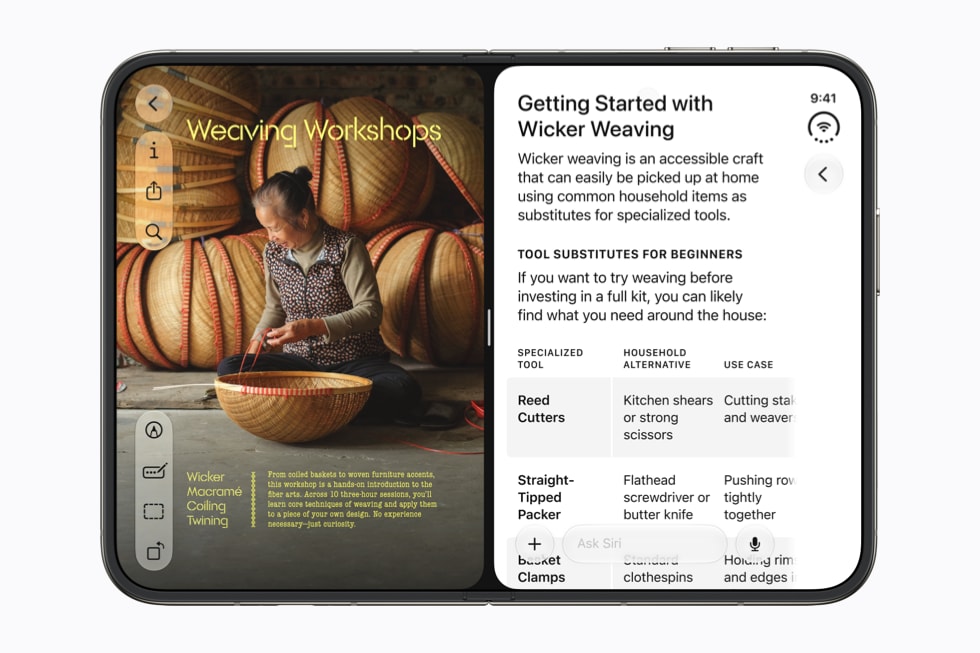 Browsing and chatting with Siri AI side by side. Image: Apple
The iPhone Duo ships with iOS 27.1, reworked for the new shape. Controls and the Dock move to the side, the Dynamic Island turns vertical, and the status bar tucks into a corner. The interface adapts as you fold, prop, rotate, or flip the phone.
The headline productivity feature is Split View, putting two apps side by side on an iPhone for the first time. You can open two Safari windows at once, or talk to the new Siri AI on one half of the screen while browsing on the other. StandBy now works on either display, even when not charging, and apps like Netflix, Zoom, and Slack are already optimized for the Duo.
Battery and Charging
Apple placed a battery in each half of the phone, with software making them behave as one. Expect up to 31 hours of video on the inner display, up to 44 hours on the outer display, and up to 24 hours of mixed use. Fast charging hits 50% in about 20 minutes wired, or around 30 minutes with MagSafe or Qi2.
Connectivity and Accessories
The iPhone Duo is eSIM-only worldwide, so check that your carrier supports eSIM before buying. Apple’s N1 chip brings Wi-Fi 7 and Bluetooth 6, while the C2 modem handles cellular.
Two cases launch alongside it: the slim two-piece iPhone Duo Case for $79 and the iPhone Duo Folio for $129, which adds a built-in kickstand.
The Verdict: Should You Buy It?
The iPhone Duo isn’t meant for everyone, and at $1,999 it isn’t pretending to be. Compared to the Pro models, you give up Face ID and a telephoto lens while paying a steep premium.
But if you’ve wanted a phone that doubles as a pocket-sized tablet, lets you truly multitask, and makes video feel big again, Apple’s first foldable looks carefully thought out. The real test is how it holds up after months of daily folding, and only hands-on reviews after launch will tell.
Prices shown are U.S. prices. Local pricing varies by country and region.




Leave a Reply