
German Chancellor Merz Hosts ‘Frugal’ Allies to Push for EU Budget Cuts
| EU Budget Proposal | Nearly €2 trillion ($2.3 trillion) for 2028–2034 |
|---|---|
| Meeting Location | Federal Chancellery in Berlin, Germany |
| Participating Leaders | Leaders of Germany, Austria, Denmark, and Finland |
| German Political Context | Upcoming state elections in Saxony-Anhalt, Mecklenburg-Western Pomerania, and Berlin |
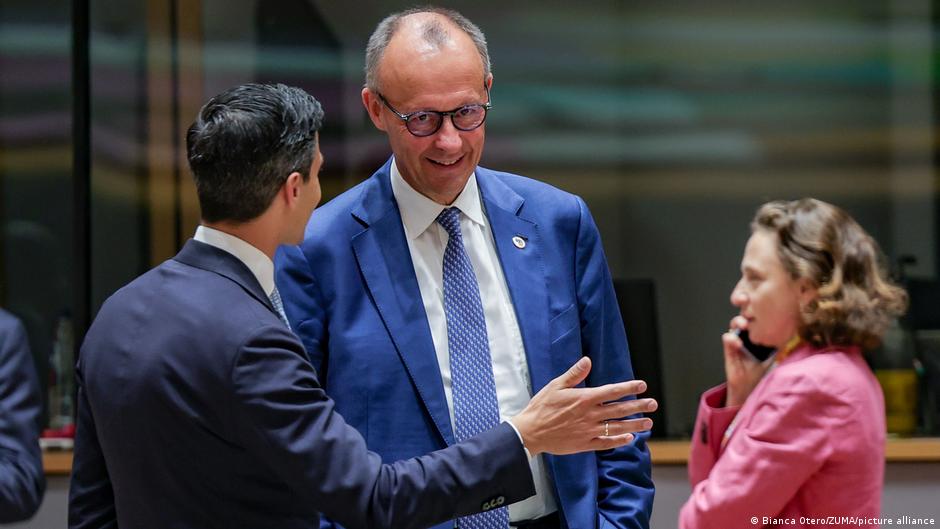
German Chancellor Friedrich Merz hosted the heads of government from Austria, Denmark, and Finland in Berlin on Thursday as fiscal conservative nations seek a unified strategy to reduce the European Union’s upcoming multi-year spending plan.
Austrian Chancellor Christian Stocker, Danish Prime Minister Mette Frederiksen, and Finnish Prime Minister Petteri Orpo arrived at the Chancellery around midday for high-level talks. The four leaders met to align their positions ahead of negotiations over the EU’s 2028–2034 long-term budget framework. Merz has voiced strong opposition to the European Commission’s current draft, which proposes spending nearly €2 trillion ($2.3 trillion), describing the proposed sum as “unaffordable.”
The diplomatic push coincides with growing domestic political strain for the German leader. Chancellery Minister Nina Warken dismissed questions on Thursday regarding Merz’s political future ahead of upcoming state elections, where his center-right Christian Democratic Union (CDU) faces weak polling figures. Speaking to German broadcasters RTL and ntv, Warken asserted that “Friedrich Merz will remain chancellor afterwards,” adding that the federal coalition remains focused on implementing legislative reforms concerning pensions, long-term care services, and administrative bureaucracy.
The political pressure centers on regional state elections scheduled in September. Saxony-Anhalt holds its election on September 6, with public opinion polls indicating the far-right Alternative for Germany (AfD) leads with over 40 percent support, placing the CDU far behind. Additional state elections are set to follow two weeks later in Mecklenburg-Western Pomerania and the city-state of Berlin.
In other national developments on Thursday, economic data from the Munich-based Ifo Institute showed modest improvement in employment sentiment. The institute’s employment barometer rose to 94.8 points in August from 93.0 points in July, which Ifo economist Timo Wollmershäuser characterized as a “slight upward movement,” though overall corporate job cuts continue across most industrial sectors. Separately, emergency services responded to a violent crime at a school in Gosen-Neu Zittau, located in Brandenburg southeast of Berlin. Authorities provisionally arrested a male suspect, while the DPA news agency reported a man and a woman were killed. Local police spokeswoman statements cited by AFP indicated the incident was not believed to be an indiscriminate mass shooting event.
Background
The European Union negotiates its long-term budget, known as the Multiannual Financial Framework, on a seven-year cycle. Discussions over the 2028–2034 period pit net contributor nations—often termed the “frugal” group—against member states advocating for expanded central spending on regional development, climate initiatives, and economic support.
In Germany, regional state elections frequently serve as a barometer for national political sentiment. High polling figures for opposition parties, particularly the far-right AfD in eastern states, have heightened scrutiny on Chancellor Merz’s coalition government and its domestic economic policies.


Leave a Reply