
Hong Kong Court Convicts Two Tiananmen Vigil Organizers in Landmark National Security Case
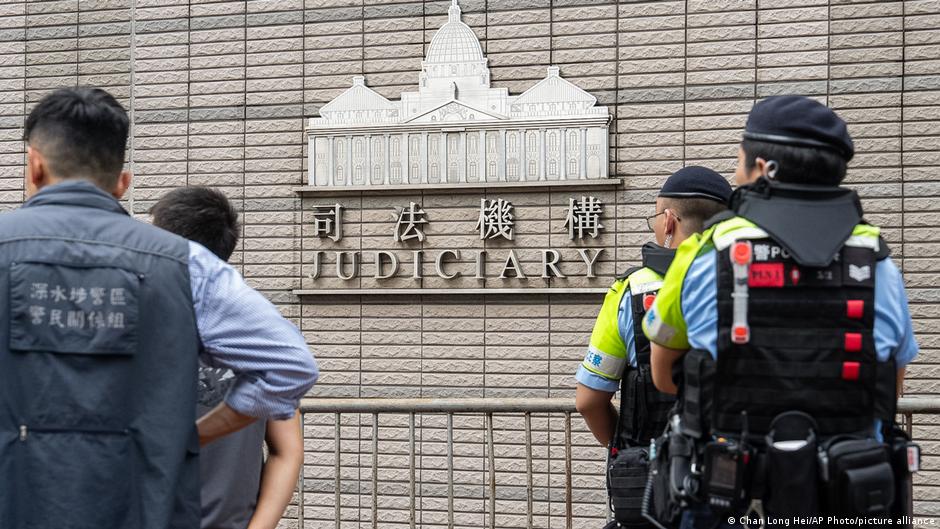
A Hong Kong court has convicted two prominent pro-democracy activists over their role in organizing the city’s annual commemorations of the 1989 Tiananmen Square crackdown, in one of the most closely watched national security cases since Beijing imposed the sweeping legislation in 2020.
The High Court on Friday found Lee Cheuk-yan and Chow Hang-tung guilty of inciting subversion under Hong Kong’s National Security Law. Both were former leaders of the now-disbanded Hong Kong Alliance in Support of Patriotic Democratic Movements of China, the group that organized the city’s annual June 4 vigils for decades.
The verdict marks another major step in Hong Kong’s continuing crackdown on organized political dissent and public commemoration of the Tiananmen crackdown.
Why the Case Matters
The annual Tiananmen vigil was once one of Hong Kong’s most visible expressions of political freedom.
For more than three decades, thousands of people gathered each June 4 to light candles and remember those killed when Chinese authorities crushed the 1989 pro-democracy movement in Beijing.
The gatherings became increasingly difficult to hold after the 2019 mass protests in Hong Kong. Authorities first banned the vigil under COVID-19 restrictions in 2020, and the national security crackdown that followed effectively ended the tradition.
The Hong Kong Alliance was subsequently disbanded after authorities demanded information from the organization and accused it of activities threatening national security.
Prosecutors later argued that the group’s long-standing political objective of ending China’s one-party rule amounted to an attempt to undermine the Communist Party and the political system established under China’s constitution.
Lee and Chow Rejected the Prosecution’s Case
Lee, a veteran labor activist and former Hong Kong legislator, and Chow, a lawyer and former vice-chair of the Alliance, denied that their activities were intended to overthrow the government.
Their defense argued that calling for democratic reform and remembering the victims of Tiananmen did not amount to inciting subversion.
The court nevertheless concluded that the Alliance’s repeated calls to “end one-party dictatorship” crossed the line into conduct prohibited by the national security legislation. Reuters reported that the judges considered the slogan capable of encouraging hostility toward the Communist Party and undermining confidence in its leadership.
Chow represented herself during parts of the proceedings and argued that the case effectively criminalized peaceful advocacy for democratic change.
Both Activists Face Up to 10 Years in Prison
The convictions do not immediately determine how long the two activists will spend behind bars.
Lee and Chow each face a maximum sentence of 10 years’ imprisonment under the relevant national security provisions. The court is expected to hold separate mitigation and sentencing proceedings.
A third defendant, former Alliance chairman Albert Ho, had previously pleaded guilty.
The three activists had been detained for years. Lee and Chow were arrested in 2021 and remained in custody while the lengthy proceedings moved through Hong Kong’s courts.
International Criticism
The verdict has drawn criticism from governments and rights organizations that say Hong Kong’s national security laws have severely restricted freedom of expression and political activity.
The United Kingdom, France and Germany were among the governments reported to have criticized the outcome, while rights groups argued that the defendants were being punished for peaceful political expression and remembrance.
The case has also attracted attention from U.S. and European diplomats, highlighting the international sensitivity surrounding Hong Kong’s treatment of pro-democracy activists.
Hong Kong authorities and Chinese officials, however, have consistently defended the national security framework as necessary to protect stability and prevent threats to national security.
Part of a Much Broader Crackdown
The convictions come amid a much wider transformation of Hong Kong’s political environment.
Beijing introduced the National Security Law in 2020 following months of mass protests in 2019. The legislation created offenses including secession, subversion, terrorism and collusion with foreign forces.
The law has since been used against prominent activists, politicians and civil society figures.
One of the largest cases was the so-called “Hong Kong 47” prosecution, involving activists accused of attempting to undermine the government through an unofficial primary election. Fourteen defendants were found guilty in 2024, while dozens of others pleaded guilty. Forty-five defendants ultimately received prison sentences ranging from four to 10 years.
In February 2026, Hong Kong’s Court of Appeal also rejected appeals from 12 activists in that case and upheld their prison terms.
The End of an Era for the Tiananmen Vigil
Perhaps the most significant consequence of Friday’s ruling goes beyond the two defendants.
The annual June 4 vigil had become a symbol of the political freedoms that distinguished Hong Kong from mainland China.
Its disappearance illustrates how dramatically the city’s political environment has changed since the introduction of the national security legislation.
For years, Hong Kong was one of the few places on Chinese territory where large public commemorations of the 1989 crackdown were permitted. Today, those gatherings are no longer allowed, and public discussion of the anniversary has become far more restricted.
What Comes Next?
The immediate focus will now turn to sentencing.
Lee and Chow remain at risk of lengthy prison terms, while the ruling could have wider implications for how Hong Kong courts interpret political speech, historical commemoration and calls for democratic reform under the national security framework.
The case also reinforces a broader trend that has emerged since 2020: activities once regarded as legitimate political expression in Hong Kong can now be examined through the lens of national security.
Bottom Line
The convictions of Lee Cheuk-yan and Chow Hang-tung represent another major moment in Hong Kong’s post-2020 political transformation.
For supporters, the annual Tiananmen vigil was a peaceful act of remembrance and a symbol of Hong Kong’s freedoms. For prosecutors, the activists’ calls for an end to one-party rule crossed into prohibited political activity.
The court’s decision has therefore become about more than two activists or a single organization. It highlights the increasingly narrow space for organized political dissent and public commemoration in Hong Kong under the city’s national security laws.
This article is independently written using reporting from Reuters, Associated Press and other major international sources. It does not reproduce the wording of the supplied Newspixer article.


Leave a Reply