
Syrian Court Sentences Assad to Death in Absentia as Victims Demand Broader Accountability
| Verdict | Death sentence in absentia |
|---|---|
| Main Defendant | Bashar Assad |
| Assad's Location | Russia |
| Documented Civilian Deaths | Over 234,805 |
| Regime Chemical Attacks | 217 |
A court in Damascus has sentenced former Syrian dictator Bashar Assad and several high-ranking members of his regime to death in absentia for war crimes and crimes against humanity. The mid-August ruling represents the first major legal effort to examine former regime atrocities in court following the overthrow of the government in late 2024. However, with Assad residing in Russia, human rights advocates and survivors caution that the symbolic judgment falls short of full accountability.
The court found Assad guilty of premeditated murder, torture, and unlawful deprivation of liberty. Following the collapse of his administration, Assad fled to Russia, where several other high-ranking Syrian officials are currently residing or hiding.
Sentencing and Extradition Hurdles
Despite the court’s judgment, legal enforcement remains uncertain. Russia and Syria signed an extradition treaty in 2023, but observers say Moscow is unlikely to surrender its long-time ally. Additionally, provisions within the agreement allow extradition to be refused if the suspect faces the death penalty.
In August, Syrian Deputy Justice Minister Mustafa al-Qassem stated that authorities created a commission to work alongside Interpol. He indicated that cooperation with international partners aimed to accelerate legal proceedings against fugitive suspects.
The court decision generated strong domestic reactions. Lina Chawaf, a Syrian journalist and researcher at Harvard University’s Center for Middle Eastern Studies, noted that many citizens welcomed the verdict. "The verdict had a lot of echoes by people, they were so happy," Chawaf said, adding that local media presented the outcome as a milestone for transitional justice.
Reactions and Transitional Justice Demands
Human rights organizations and activists view the trial through differing lenses. Rana Sheikh-Ali, founder of the organization Daret Salam, described the trial as largely symbolic. While opposing the death penalty on human rights grounds, Sheikh-Ali noted that many local residents viewed the death sentences as justified.
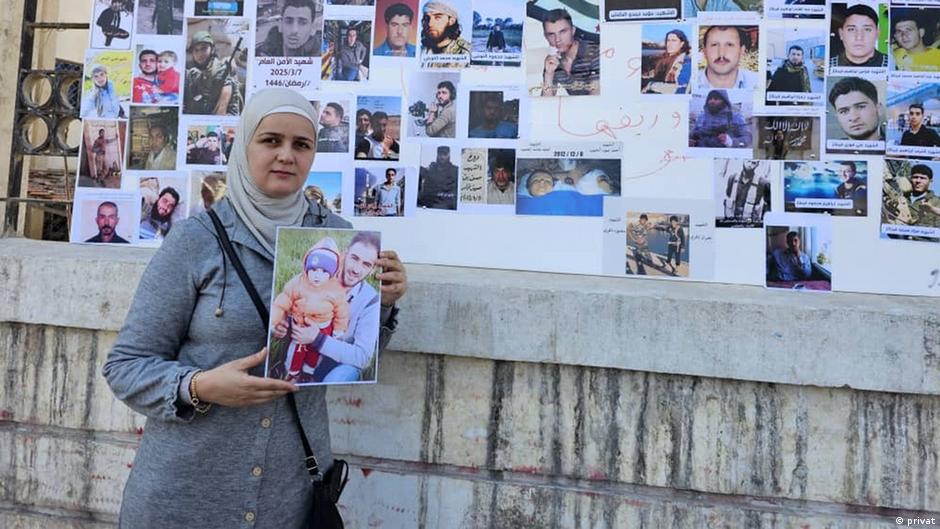
Survivors of regime abuses stress that judicial proceedings must go beyond top officials. Huda Khayti, a Syrian women’s rights activist, described the conviction as positive, "even if it’s only on paper," while pointing out that Assad remains free in Russia. Khayti survived a 2013 chemical attack in eastern Ghouta, lost her brother to regime bombings, and fled her hometown of Douma for Idlib in 2018 before returning to rebuild a women’s center.
Khayti urged authorities to target middle- and low-level figures who enabled state violence, including administrators who filed reports leading to detentions in the Saydnaya torture prison. "These individuals are just as guilty as the torturers themselves," Khayti said.
Extent of Reported Regime Crimes
Data from the Syrian Network for Human Rights illustrates the scale of offenses facing investigation. The group reports that more than 234,805 civilians were killed during the civil war, with at least 202,000 attributed directly to the Assad regime and its allies.
The network has documented at least 181,312 cases of arbitrary arrest and forced disappearance, 45,339 torture-related deaths, and 217 chemical weapons attacks carried out by regime forces. The organization noted that total figures are likely higher than documented counts.
Rights advocates emphasize that comprehensive transitional justice requires finding missing persons, paying reparations, reforming state institutions, and ensuring victims safely participate in all stages of the legal process.
Background
The Syrian civil war broke out in 2011 following a brutal government crackdown on pro-democracy protests, resulting in hundreds of thousands of deaths and millions displaced. The Assad regime was overthrown in late 2024. Nearly two years after the regime’s collapse, Syria’s new legal institutions are seeking to address civil war atrocities, though key leaders remain beyond the country’s jurisdiction.




Leave a Reply