
Death Toll Reaches 750 in Himalayan Floods as Rescuers Race to Reach Trapped Workers
| Total Fatalities | 750 (734 in Nepal, 16 in Tibet) |
|---|---|
| Missing People | More than 3,000 |
| Affected Population | Over 90,000 estimated by Red Cross |
| Suspected Cause | Glacier collapse in the Himalayas |
The combined death toll from severe flooding across Nepal and Tibet reached 750 on Sunday, with more than 3,000 people still reported missing. Scientists suspect the disaster, which began on Wednesday, was triggered when a Himalayan glacier collapsed, sending immense volumes of water cascading down river valleys.
Nepal has borne the vast majority of casualties, with national disaster officials reporting 734 deaths. In Tibet, Chinese state media reported 16 confirmed fatalities. The Red Cross estimates that the broader impact of the flooding has affected upwards of 90,000 people across the region.
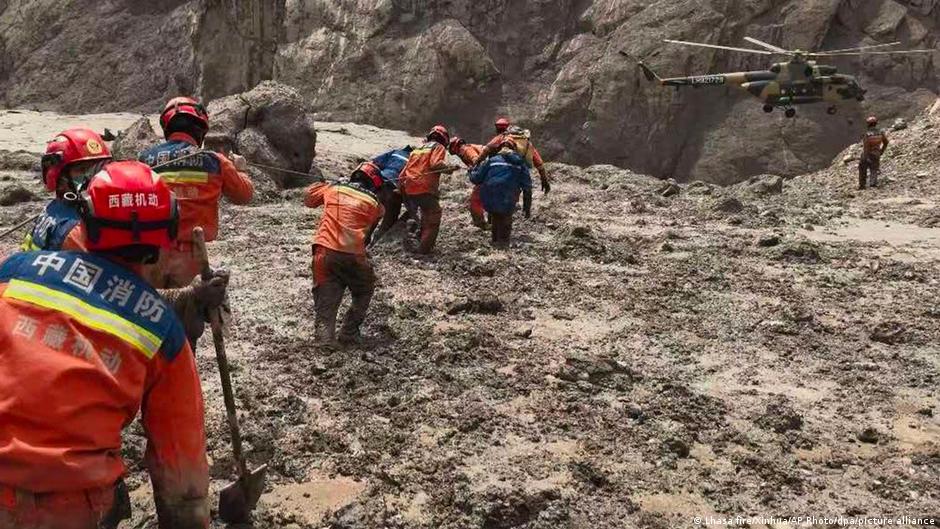
Rescue operations are heavily concentrated on several hydroelectric power projects along Nepal’s Trishuli River, where more than 900 workers disappeared after floodwaters submerged the sites. Emergency teams are attempting to rescue over 100 workers believed to still be alive inside flooded tunnels. On Saturday night, military units used specialized drills to breach an upper tunnel section to supply oxygen and lower a camera into the space.
A statement from the Nepalese prime minister’s office noted that emergency responders encountered “continuous rainfall and difficult conditions” while carrying out non-stop search operations. Specialist crews from India and China have joined the effort alongside Nepal’s high-altitude mountain rescue squad, which typically assists climbers on Mount Everest.
The threat of further flooding remains high. Nepalese authorities issued new alerts on Sunday for residents near the Bhotekoshi River as water levels rose, sending text warnings directing people to move to higher ground. Across the border, Chinese state media reported that monitoring drones located a new barrier lake formed by landslide debris near the Gyirong border port, forcing the relocation of nearby rescue teams due to the danger of a dam burst.
International aid has begun to assemble. Nepalese Foreign Ministry spokesperson Lok Bahadur Chhetri stated that the country requires external help with tunnel rescue operations, victim identification, and DNA testing. The United States announced $3.6 million in humanitarian aid to supply emergency food for up to 10,000 households over three months, while the European Union and several nations have also pledged financial aid.
Background
The mountainous region straddling Nepal and Tibet is highly susceptible to sudden flash floods driven by land instability, river blockages, and glacial activity. Major river basins in the area support dense infrastructure development, including numerous hydroelectric stations built along narrow mountain valleys, exposing large workforces to sudden hydrological shifts.




Leave a Reply