
Far-Right AfD Outlines Radical Governing Agenda for Saxony-Anhalt
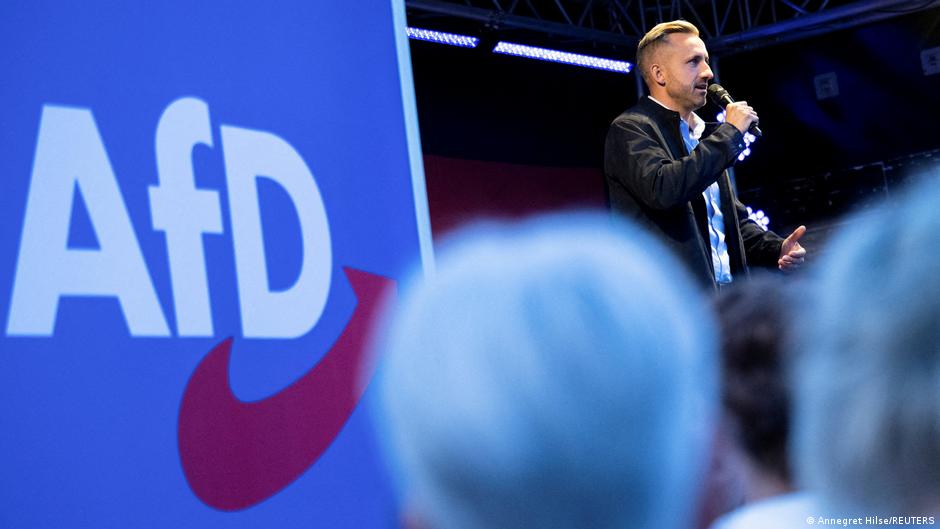
| Lead Candidate | Ulrich Siegmund |
|---|---|
| Intelligence Classification | Confirmed far-right (Saxony-Anhalt chapter) |
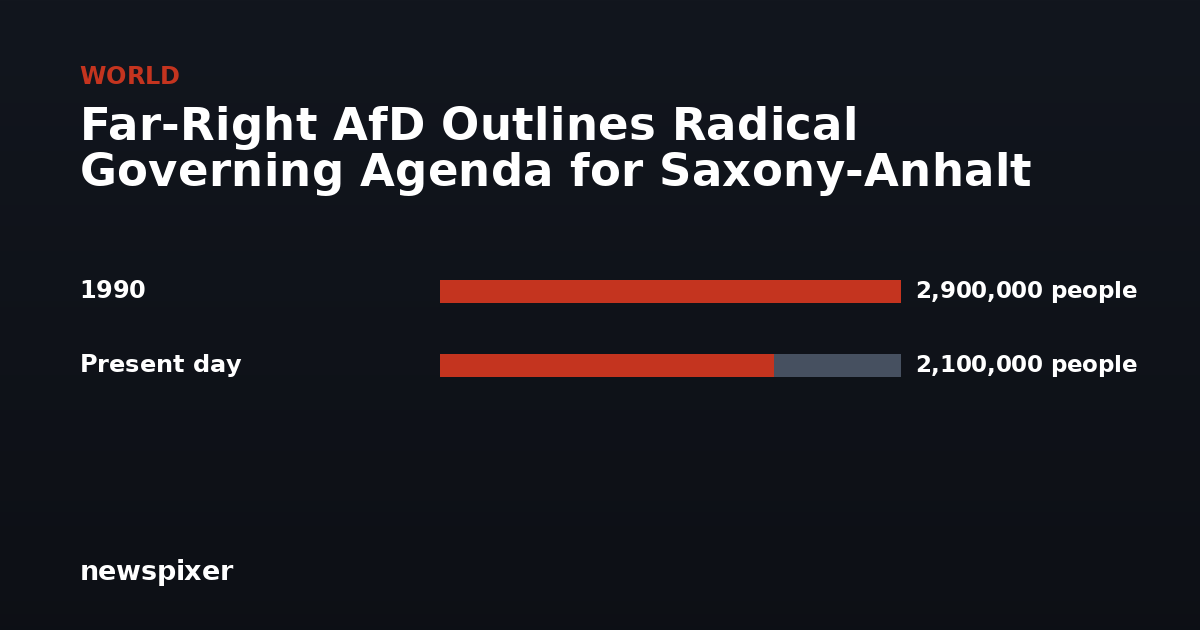
| 1990 Population | 2.9 million |
| Current Population | 2.1 million |
The Alternative for Germany (AfD) is seeking to form a single-party government in the eastern German state of Saxony-Anhalt, where it currently leads opinion polls ahead of upcoming elections. Lead candidate Ulrich Siegmund aims to become state premier under a draft party platform that proposes major changes to migration, education, economic policy, and local security. Germany’s domestic intelligence agency classifies the Saxony-Anhalt chapter of the AfD as a confirmed far-right organization.
Hardline stance on asylum and migration
In its governing draft, the AfD promises immediate expulsions of immigrants living without valid authorization, pledging "deportation from minute one!" as part of what it calls a "180-degree turnaround in migration policy." To coordinate state asylum policy, the party proposes establishing a dedicated Remigration Task Force within the state government.
The platform outlines plans to exclude children and teenagers who lack permanent residency from attending regular school classes. It also calls for stricter asylum regulations, including increased detention pending deportation, mandatory work requirements for asylum seekers, and the complete defunding of state integration programs, which the party describes as an "asylum industry." However, individual German states lack legal jurisdiction over federal deportation laws, and measures such as segregated schooling could face challenges under international and European law.
2>Economic concerns and population decline
The AfD’s push to curtail immigration comes amid severe demographic shrinking in Saxony-Anhalt. Since German reunification in 1990, the state’s population has fallen from 2.9 million to 2.1 million—the largest drop of any German state. The depopulation has led to chronic shortages of skilled workers, particularly in nursing and elderly care.
Rather than utilizing foreign immigration to fill labor gaps, the AfD proposes encouraging German citizens living abroad to return. Its platform outlines a return program offering financial bonuses and priority placement for housing and daycare. The draft does not state how many returnees the party anticipates attracting or how much funding would be allocated to the scheme.
Economic researchers have expressed concern that the party’s agenda could aggravate labor shortages. Reint Gropp, president of the Halle Institute for Economic Research, told the newspaper Die Welt that "highly qualified professionals, in particular, have options," warning that skilled workers would avoid the region if they anticipate a hostile environment.
2>Foreign relations and security proposals
German state governments do not control national foreign or defense policies, but state premiers can influence political debates through the Bundesrat, the parliamentary body representing state interests. The AfD platform calls for a rapprochement with Russia, an end to sanctions, and expanded Russian language instruction in state schools using native speakers. Regarding Ukraine, the party advocates a return offensive to repatriate Ukrainian refugees, though refuge status remains governed by federal policy.
On public safety, the AfD proposes establishing a "voluntary citizen patrol" as an auxiliary force alongside local police, arguing that regular police forces are overwhelmed. Legal scholar and criminologist Thomas Feltes of Ruhr University Bochum publicly criticized the initiative, describing such groups as vigilantes. Writing in Legal Tribune Online, Feltes noted that "it is the police’s duty to ward off dangers and ensure the protection of the public," warning that informal patrols stoke public fear rather than improve safety.
Background
Saxony-Anhalt is a state in eastern Germany that has faced ongoing economic challenges and population decline since reunification in 1990. Under Germany’s federal system, state governments oversee local matters such as education and policing, while key policy areas like immigration control, foreign relations, and defense remain primarily under federal jurisdiction.


Leave a Reply