
German Authorities Investigate Infrastructure Explosions and Power Grid Sabotage
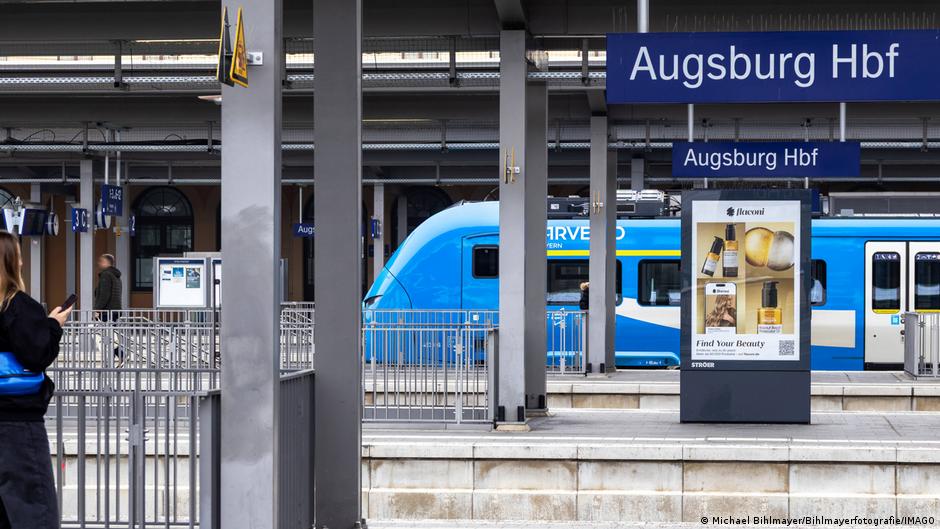
| Augsburg Explosion | Minor injuries reported after an object exploded near the city's main train station. |
|---|---|
| Power Sabotage | Police initiated a criminal probe near Cologne and a terror investigation in Brandenburg over power station attacks. |
| Russian Visa Restrictions | Berlin is urging EU nations to limit tourist visas for Russian citizens amid security concerns. |
| Agricultural Relief | Germany introduced a €1 billion financial package to support farmers affected by severe drought. |
German law enforcement agencies have launched investigations into multiple security incidents and suspected infrastructure sabotage across the country, including an explosion near a railway station and deliberate attacks on power installations.
In Bavaria, minor injuries were reported after an unidentified object exploded near the Augsburg train station. Concurrently, police in North Rhine-Westphalia searched an electrical substation in Bergheim as part of an investigation into a criminal act at a power station near Cologne. Federal authorities have also opened a terrorism investigation following the sabotage of a power station in the eastern state of Brandenburg.
The security alerts coincide with increased diplomatic friction between Germany and Russia. Berlin announced that Moscow was responsible for an attempted drone attack targeting Leipzig airport in August, prompting German officials to consider further retaliatory measures. As part of its security response, Germany is pressing other European Union members to reduce the issuance of short-stay tourist visas to Russian nationals. EU member states issued more than 600,000 short-stay visas in Russia last year, with Italy, France, and Spain granting the majority, while Germany issued 20,000. German officials cited security risks as the primary rationale for tighter entry restrictions across the bloc.
In economic developments, the federal government unveiled a €1 billion emergency assistance package for farmers suffering from widespread heat waves and drought. Agriculture Minister Alois Rainer categorized the drought’s impact as a crisis of national importance. The assistance will be delivered through low-interest loans, tax relief, and fertilizer subsidies, although the German Farmers’ Association stated the measures are inadequate. Nationwide grain yields decreased by over 7 percent, while rapeseed harvests in Mecklenburg-Vorpommern fell by 25 percent. Agricultural producers are also facing elevated production costs driven by rising fuel and fertilizer prices connected to the war in Iran.
Politically, regional instability grew in Thuringia after three state lawmakers resigned from the populist BSW party to form an independent group, though they plan to continue supporting the ruling CDU-SPD-BSW coalition. Separately, media reports claimed automotive manufacturer Volkswagen intends to close four domestic manufacturing plants between 2031 and 2034, though the IG Metall union dismissed the reports, stating major closures require broad worker approval.
Background
Germany has faced growing concerns over the vulnerability of its critical infrastructure, including transport networks, communication lines, and energy grids. Federal security agencies have repeatedly raised awareness regarding potential physical sabotage and hybrid security threats affecting essential utility networks across Western Europe.



Leave a Reply