
Human Rights Watch Reports Widespread Crackdown on Tunisian Civil Society

| Prosecutions documented | At least 47 individuals linked to NGOs face legal action by Tunisian authorities. |
|---|---|
| Detentions beyond legal limits | Minimum of 10 people held in pre-trial detention exceeding the 14-month legal limit. |
| Organization suspensions | At least 20 civil society groups suspended and around 30 appeals rejected. |
| Prominent sentencing | Rights advocate Saadia Mosbah sentenced to eight years in prison on financial charges. |
Human Rights Watch has detailed an expanding campaign by Tunisian authorities targeting non-governmental organizations and human rights advocates, according to a 49-page report released on Wednesday. The study documents systematic state efforts to restrict civic participation through criminal charges, prolonged pre-trial detentions, financial audits, and organizational suspensions.
The human rights organization established that state officials have prosecuted at least 47 individuals connected to non-profit entities. At least 10 of those individuals were held in preventive custody for more than 14 months, a timeframe that exceeds the maximum limit set by Tunisian law. Following court proceedings in 2025 and 2026, at least 14 people affiliated with civil society groups received prison sentences.
Among those convicted is prominent human rights defender Saadia Mosbah, who received an eight-year prison sentence and a substantial fine on March 19 following financial crime allegations. Furthermore, five employees working for legally registered organizations assisting asylum seekers were convicted on charges linked to their official mandates, forcing the entities to permanently end their operations.
The report highlights focused state pressure on groups addressing sensitive issues, particularly anti-racism initiatives and migrant support. Prosecutors have applied 2015 anti-money-laundering and counterterrorism statutes, as well as laws criminalizing assistance to undocumented foreign nationals, against NGO workers. Financial oversight has also intensified: in late 2024, the Tax Evasion Investigation and Prevention Brigade initiated inquiries into at least a dozen entities, including I Watch and Amnesty International’s regional office. These measures led to frozen bank accounts and restrictions by commercial banks on foreign currency operations.
Authorities have also targeted civic entities collectively using Decree-Law 2011-88. Human Rights Watch verified that at least 20 associations faced suspensions between July and October 2025, and again from April to May 2026. Legal representatives reported that authorities rejected appeals from approximately 30 suspended groups. Non-governmental entities currently facing formal dissolution proceedings include the anti-racism group Mnemty and Al Khatt, which publishes the independent online outlet Inkyfada.
Additionally, civil society organizations have reported denied accreditations for election monitoring, increased limitations on prison visits, and official bans on public gatherings. Rabie Kacem, a member of the civic collective Nafas, observed that an activist in the country now “thinks twice before speaking, writing or organising an activity.”
Background
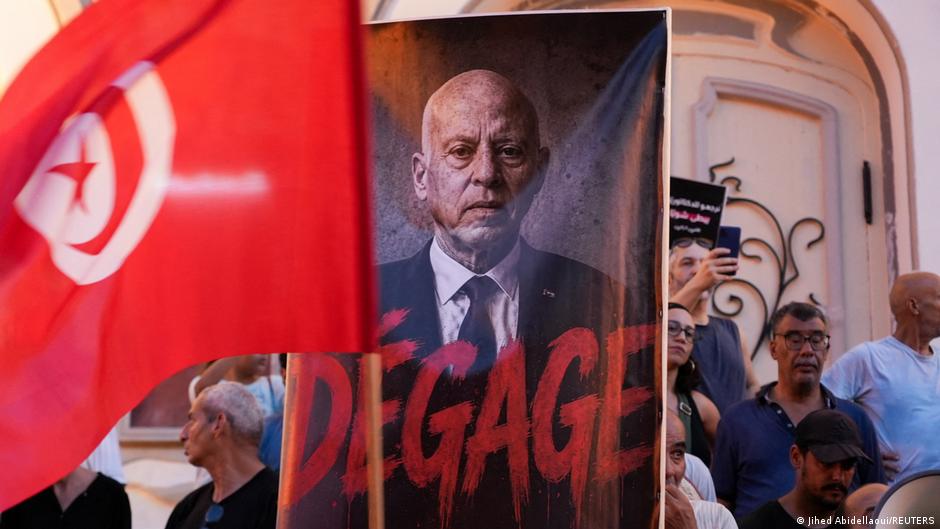
Civic space expanded significantly in Tunisia after the 2011 revolution that removed long-time leader Zine El Abidine Ben Ali. However, the political environment altered substantially after President Kais Saied instituted measures in 2022 that brought the country’s judiciary under executive control.
The heightened scrutiny of civil society groups has coincided with state policy regarding migration. In February 2023, President Saied publicly claimed that the presence of sub-Saharan migrants was part of a plan to alter Tunisia’s demographic composition, calling it an occupation.



Leave a Reply