
Lower Saxony Leader Urges Co-operation to Prevent Volkswagen Plant Closures
| Location | Hanover, Germany |
|---|---|
| Key Figures Involved | Olaf Lies (Lower Saxony Premier), Oliver Blume (VW CEO), Daniela Cavallo (Works Council Chief) |
| Potential Job Cuts | Up to 50,000 additional jobs at risk beyond 50,000 previously planned |
| Facilities at Risk | Five Volkswagen Group plants facing potential shutdown |
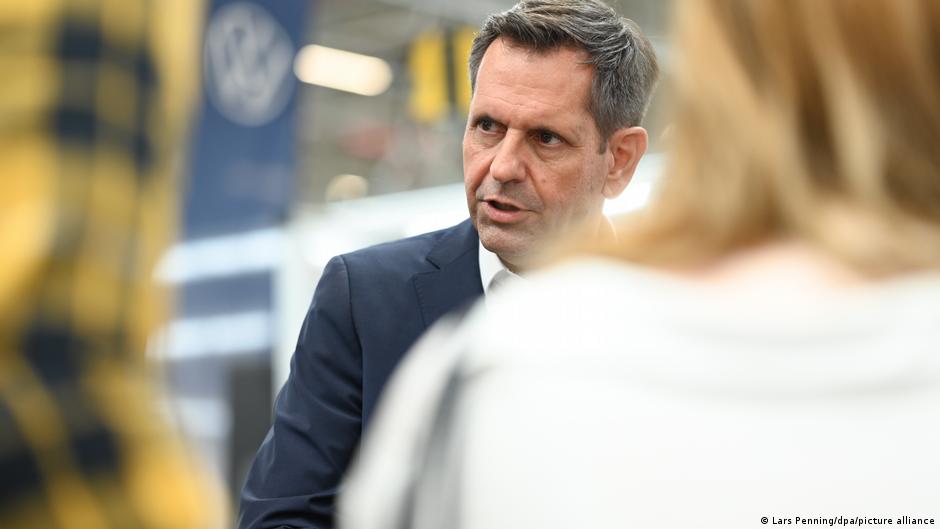
Olaf Lies, the state premier of Lower Saxony, conducted a visit to a Volkswagen production facility in Hanover on Monday to call for unified action among shareholders to avert potential factory shutdowns. Volkswagen, which stands as Germany’s largest automotive manufacturer, is headquartered in the northwestern German state governed by Lies. The state premier also serves as a member of the automaker’s supervisory board, giving regional authorities a direct voice in high-level corporate governance.
The assembly plant in Hanover represents one of five production locations across the broader Volkswagen Group that are currently facing the threat of closure. Lies visited the factory in advance of a series of internal staff assemblies planned for this week. These meetings will mark the first occasion where Volkswagen employees will be able to directly address and question Chief Executive Officer Oliver Blume regarding his proposed corporate restructuring plans.
The company’s leadership has signaled that significant workforce reductions may be necessary to stabilize corporate operations. Blume has issued warnings that up to 50,000 jobs could be eliminated in order to restore the company’s market competitiveness. This potential wave of redundancies would be implemented in addition to a separate cut of 50,000 positions that had already been agreed upon in earlier negotiations between management and workforce representatives.
Speaking to attendees at the Hanover factory, Lies underscored the strategic importance of the car industry to the region, asserting that “Lower Saxony is automotive country … and this must remain so.” Emphasizing the need for consensus between corporate decision-makers, shareholders, and labor representatives, Lies stated that “it is important to me that we find joint solutions” rather than proceeding with plant closures.
The automaker is confronting multiple international business headwinds that have damaged its financial standing. Volkswagen has experienced growing operational difficulties caused by escalating commercial competition from rival manufacturers based in China. Furthermore, the company has incurred billions in expenses related to import tariff costs imposed by the United States, placing further strain on its balance sheet.
Attempts by chief executive Blume to execute sweeping changes have encountered pushback within company governance. Volkswagen’s supervisory board has already blocked several primary components of Blume’s proposed restructuring program.
Worker representatives have similarly voiced firm resistance to management’s proposals. Daniela Cavallo, who serves as the head of Volkswagen’s works council and holds a seat on the supervisory board on behalf of the company’s German workforce, reiterated her firm stance against mandatory redundancies and factory closures. While Cavallo conceded that the company faces major challenges in becoming competitive again, she argued that corporate planning cannot be sustained “simply by talking about reducing labour costs” and questioning plant viability.
Background
Volkswagen is Germany’s largest vehicle manufacturer and a major industrial employer in the country. Lower Saxony, a state in northwestern Germany, holds a significant financial interest in the company, with regional political leaders occupying seats on Volkswagen’s supervisory board to oversee major corporate decisions.
The global automotive sector has faced increased pressures due to shifting market dynamics, including the rapid expansion of Chinese vehicle manufacturers and trade disputes involving international tariffs. These challenges have forced major legacy carmakers to adjust production strategies and workforce sizes.


Leave a Reply