
US Unveils Sweeping Sanctions Against Iran as Tehran Claims Two-Year Counterplan
| US Sanctions Package | Operation Economic Outcast targets five sectors and nearly 60 entities, individuals, and vessels. |
|---|---|
| Iranian Response | Iran claims to have a two-year plan to manage sanctions and mitigate economic isolation. |
| International Reaction | China rejected the US measures, stating it will take steps to protect its national interests. |
| Energy Disruption | Blockade of the Strait of Hormuz since late February has pushed Brent crude to $92 a barrel. |
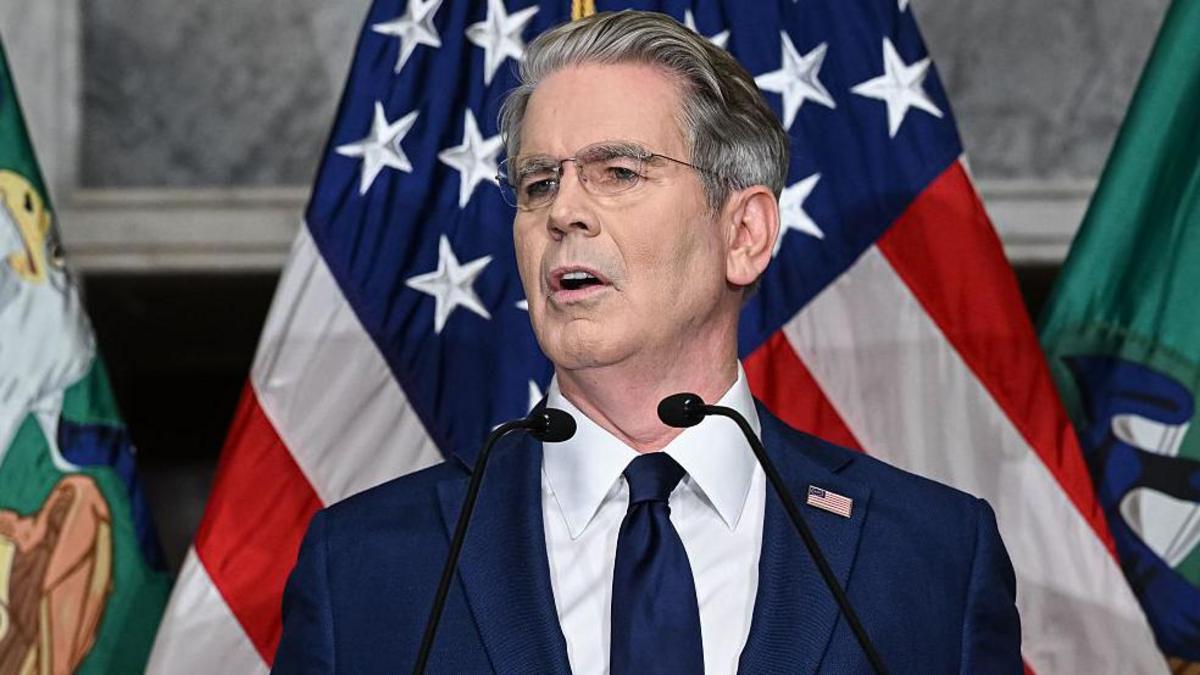
The United States has launched a broad financial campaign to sever Iran’s international trade ties, prompting Tehran to assert that it is prepared with a multi-year strategy to withstand the pressure. US Treasury Secretary Scott Bessent outlined the initiative, termed “Operation Economic Outcast,” declaring that Washington was “no longer managing the Iranian threat, we are ending it.”
Under the newly announced measures, the US Treasury Department targeted five economic sectors: digital assets, technology, gold, aviation, and shipping. Authorities also placed sanctions on nearly 60 individuals, corporate entities, and vessels accused of facilitating Iranian oil trades and evading existing restrictions. Bessent stated that any foreign nation maintaining financial partnerships with Tehran faces complete global isolation. He added that President Donald Trump would personally reach out to foreign leaders to request an immediate end to trade activities with the Iranian regime.
Iranian officials dismissed the impact of the US measures shortly after the announcement. Speaking on state television, Economy Minister Ali Madanizadeh stated that Tehran had anticipated the US strategy and formulated a two-year management plan, adding, “We also have our own tools and know how to play the game.” Madanizadeh argued that Washington would face another defeat, noting that neither China nor Russia accepted the US measures. In Beijing, the Chinese Foreign Ministry criticized the use of pressure tactics, affirming that China would act to protect its national interests.
The financial offensive arrives amidst heightened regional turmoil and rising energy costs driven by an armed conflict that began at the end of February. Iran has effectively blocked the Strait of Hormuz, a critical maritime passage through which roughly one-fifth of global oil and gas supply typically flows. Tehran issued fresh warnings against unauthorized vessel passage and threatened to halt all oil exports from the region if fighting continues. Elevated energy prices have driven up global living costs, with Brent crude reaching $92 a barrel on Monday and US retail gasoline rising above $4 per gallon.
Market analysts expressed skepticism regarding the operational impact of the latest package. David Oxley, chief climate and commodities economist at Capital Economics, noted that a US naval blockade is already restricting Iranian oil shipments. He added that the direct impact on energy revenues would be “somewhat of a damp squib,” partly because roughly 90 percent of Iran’s crude exports are directed to China, which has historically rejected US sanctions.
Background
Relations between Washington and Tehran have been strained following years of economic sanctions and military standoffs. In 2015, Iran signed a landmark international agreement to limit its nuclear activities in exchange for sanctions relief. However, the United States withdrew from the accord in 2018 under President Donald Trump and reinstated broad sanctions aimed at limiting Iran’s trade capacity.
Subsequent attempts to negotiate a return to diplomatic agreements failed to resolve core disputes. Tensions escalated sharply following the outbreak of military hostilities at the end of February, leading to maritime disruptions in key shipping routes. The Strait of Hormuz, located south of Iran, remains a vital transit point for global energy exports, and ongoing blockades have significantly driven up global petroleum prices and fueled domestic inflation concerns in major consumer nations.


Leave a Reply