
Canada hits US with retaliatory tariffs up to 50%

| Total tariff value | Nearly C$28 billion ($20 billion) of US goods |
|---|---|
| Tariff rate range | 15% to 50% across hundreds of items |
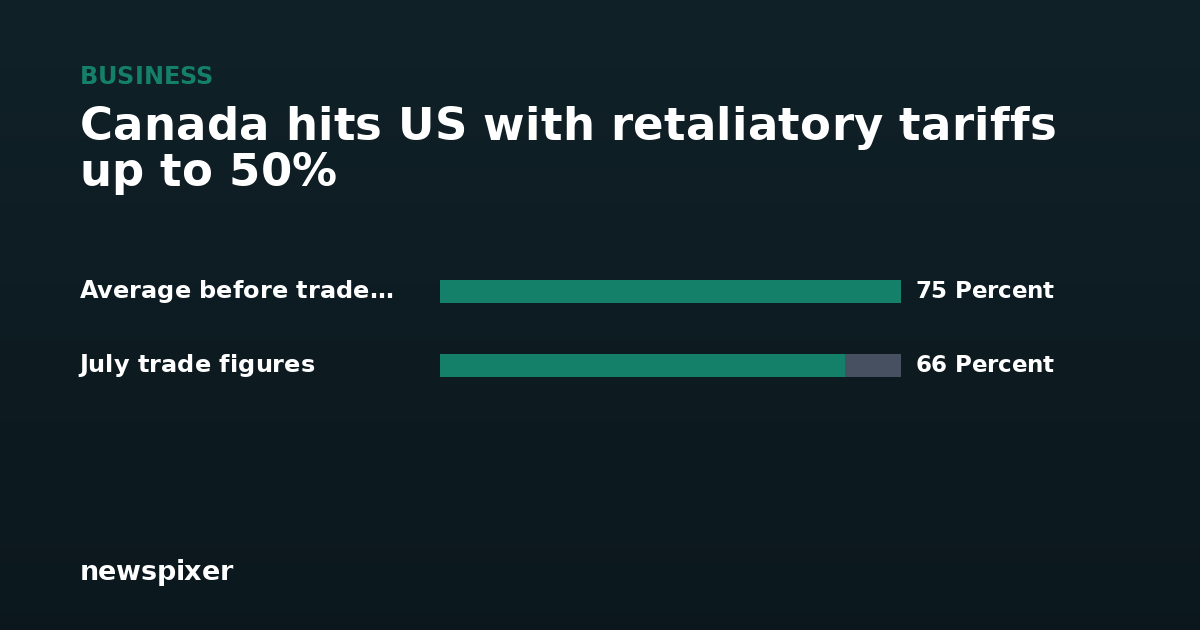
| US export share | Fell from 75% pre-war average to 66% in July |
| Bilateral trade size | Nearly $900 billion annually |
Canada has put into effect retaliatory tariffs on US goods valued at nearly C$28 billion ($20 billion), marking a sharp escalation in the trade conflict between the two countries. The counter-measures impose import duties of up to 50 percent on hundreds of American products, ranging from industrial metals to clothing and household appliances. The levies took effect on Tuesday following the breakdown of bilateral trade negotiations in late August.
Carney warns of economic costs during trade pivot
In a 15-minute video address on Tuesday morning, Canadian Prime Minister Mark Carney defended the new counter-tariffs, stating they “are necessary to protect our workers.” Carney acknowledged that reducing Canada’s economic reliance on the US would create financial strains, cautioning that the strategic shift “will come at a cost.” He committed his government to supporting affected workers for as long as necessary while seeking to diversify Canada’s international trading partnerships.
Addressing the broader economic friction, Carney said that “we have everything we need to pivot and prosper.” He noted that while taking action carries financial consequences, it “doesn’t come close to the cost of standing still.” Public opinion polling indicates that a majority of Canadians back the government’s decision to levy retaliatory taxes on American products.
Washington signals potential tit-for-tat escalation
The US government signaled that it may swiftly retaliate against Ottawa’s actions. US Trade Representative Jamieson Greer told CBC News in an interview that Washington would evaluate imposing tit-for-tat tariffs on Canadian goods, noting, “We’ll see this afternoon.”
The statement followed threats made on Monday by US President Donald Trump against aircraft manufacturer Bombardier. Trump threatened to halt all US business with the Montreal-based company unless it relocates its manufacturing operations to the US. Bombardier is a major component of Canada’s industrial sector, contributing over C$7 billion to the country’s gross domestic product in 2024, according to a report by accounting firm PwC. Trump maintains that import taxes encourage consumers to buy domestic goods and entice foreign firms to invest inside the US. Over the weekend, Trump posted several images on Truth Social, including a map showing North America and Greenland covered by the US flag.
Targeted products and economic carve-outs
Canada’s retaliatory schedule applies varying tax brackets across multiple product categories. Rates of 50 percent will be applied to American milk, golf clubs, steel, aluminum, jackets, and cotton T-shirts. A 25 percent tax applies to US cheese, toilet paper, and air conditioners, while 15 percent duties hit forklift trucks and industrial molds. These taxes come in addition to existing Canadian tariffs on finished US vehicles not covered under the US-Mexico-Canada trade agreement.
However, Canadian officials modified the original list after pushback from local commercial sectors. The government carved out dozens of seafood products to prevent damage to cross-border operations such as the lobster industry, where American catches are routinely processed in Canada before re-export to US buyers. Business group leaders, including Canadian Chamber of Commerce CEO Candace Laing, urged moderation, stating that “businesses understand retaliation but don’t want to see endless escalation.”
Economic fallout across the border
The intensifying dispute threatens a commercial relationship valued at nearly $900 billion last year. Although the US economy is about 13 times larger than Canada’s, Canadian exporters are disproportionately exposed because the US is their primary market. Official trade data shows the proportion of Canadian exports destined for the US fell from a pre-trade war average of 75 percent down to 66 percent in July.
The dispute is already impacting output and employment. Canada’s GDP grew by 3.3 percent in the second quarter and added 181,000 jobs between April and July, but lost approximately 41,000 jobs in August as talks collapsed and US duties took effect. Existing US duties include 25 percent taxes on Canadian vehicles, steel, aluminum, and lumber, alongside 50 percent duties introduced in late August on Canadian dairy, alcohol, hockey sticks, and perfume. Corporate adjustments are also underway, with Japanese brewer Sapporo announcing on August 31 that it would shift portion of its Canadian beer production to the US.
Background
Trade relations between Canada and the United States are governed by the Canada-United States-Mexico Agreement (CUSMA), known in the US as USMCA, which replaced NAFTA. Despite the trilateral free-trade framework, bilateral trade disputes periodically arise over specific industrial and agricultural sectors, including softwood lumber, dairy tariffs, and steel production.


Leave a Reply