
Canada Imposes Counter-Tariffs on $20B in US Imports

| Targeted Import Value | 27.6 billion CAD ($20 billion USD) |
|---|---|
| Canadian Tariff Rates | 15%, 25%, and 50% |
| US Export Dependency | 70% of Canadian exports go to the US |
| Canadian Aid Package | 7.5 billion CAD ($5.4 billion USD) |
Canada’s retaliatory tariffs on billions of dollars in American imports officially came into force on Tuesday, escalating a major trade dispute between the neighboring nations. Ottawa enacted the counter-measures in response to punitive tariffs previously implemented by Washington on Canadian goods.
The new duties target 27.6 billion Canadian dollars ($20 billion USD) worth of products arriving from the United States. The measure directly counters a 50 percent tariff imposed by US President Donald Trump on an equivalent value of Canadian exports, which Washington justified by alleging discriminatory Canadian policies toward American dairy, alcohol, and automotive sectors.
Scope of the Counter-Tariffs
Canada’s new duties are set at rates of 15 percent, 25 percent, and 50 percent across selected product categories. The tariffs focus heavily on American steel, aluminum, and dairy items such as cheese, though Canadian authorities opted to remove some seafood items from the final list. By comparison, the initial US tariffs hit approximately 5.5 percent of total Canadian exports to the US, covering products including cement and hockey sticks.
To shield domestic workers and companies from economic fallout, the Canadian federal government announced a support package totaling 7.5 billion Canadian dollars ($5.4 billion USD). Analysts noted that while the tariff conflict presents a modest overall risk to Canada’s national economy, the impact is heavily concentrated on manufacturing hubs across Central Canada.
Trump Threatens Bombardier Aircraft Sales
The trade friction spread beyond consumer goods when Trump threatened to ban the Quebec-based aerospace company Bombardier Aviation from selling aircraft in the United States unless it moves manufacturing across the border. Writing on Truth Social, Trump posted, “No more selling Bombardier in the United States!” without outlining the legal mechanism he would use to implement such a ban.
Bombardier responded by emphasizing its deep economic footprint within the US, noting that thousands of its planes are currently integrated into US airline fleets. The company stated that it sustains tens of thousands of jobs across more than 20 American states, including Texas, Kansas, California, and Arizona. It added that it spends over $2.5 billion annually across roughly 2,800 American suppliers, stating, “Bombardier values its great partnership with American companies and its US employees.”
Breakdown of Diplomatic Negotiations
Official trade talks between the two nations broke down on August 21 following meetings in Washington. Canadian Prime Minister Mark Carney suspended negotiations, citing unacceptable US demands. Carney stated that American negotiators introduced last-minute restrictions on Canada’s ability to negotiate bilateral trade deals with third countries, alongside unacceptable threats directed at French language protections and Quebec culture.
In response, Jamieson Greer, the top US trade official, told Canadian public broadcaster CBC that Washington recognized the sensitivity of linguistic protections in Quebec, stating, “This is not something where we push hard, or condition, or red-line.”
Tensions have been further heightened by public spats and personal jabs. US Treasury Secretary Scott Bessent dismissed claims of a formal trade conflict, stating on CNBC, “We’re not at war with Canada,” while referencing a former shopping mall attraction in Alberta. Meanwhile, US Pentagon chief Pete Hegseth posted social media commentary mocking a Canadian soldier’s appearance. Carney described the commentary as “beneath their office” and “not constructive,” asserting that formal discussions could resume only “when the Americans stop doing memes” and approach negotiations seriously.
Symbolic Measures and Economic Ties
The diplomatic rift has expanded into symbolic territorial disputes. In August, Trump signed an executive order purporting to rename Lake Ontario as “Lake America,” following an earlier order to rename the Gulf of Mexico as the Gulf of America. Trump has also publicly suggested that Canada should become the 51st US state, statements that have provoked widespread public anger in Canada and fueled a surge in domestic national unity.
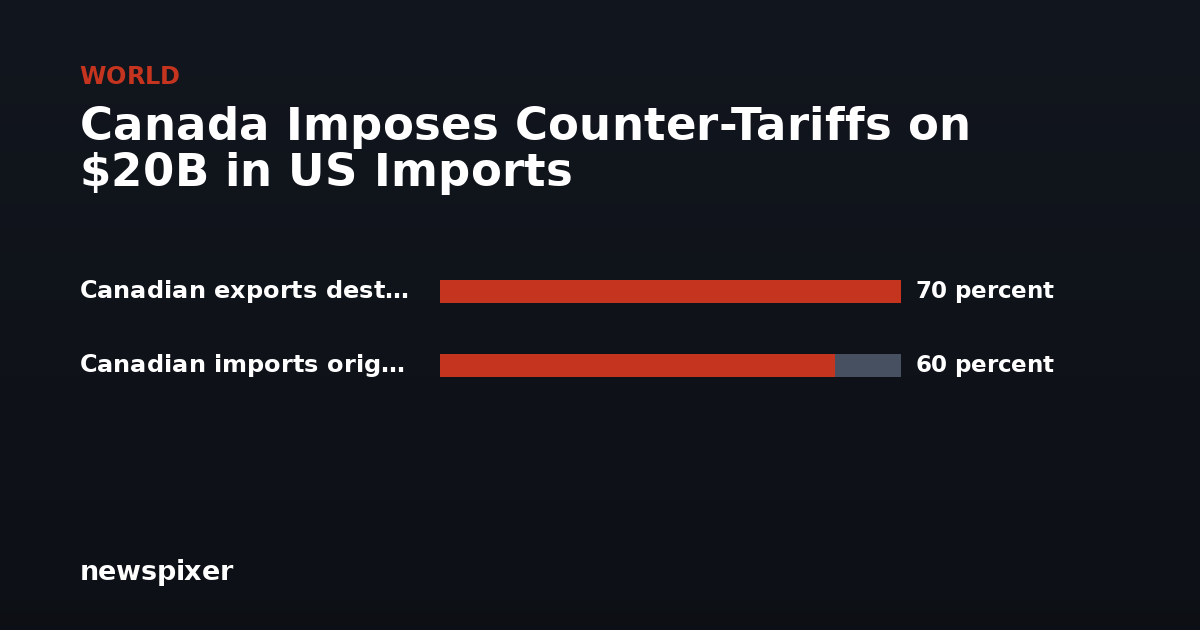
Despite strong domestic backing for Carney’s firm stance, Canada faces significant economic exposure. Approximately 70 percent of Canadian exports are bound for the US market, while nearly 60 percent of Canadian imports originate from the United States. Formal bilateral trade negotiations remain suspended with no scheduled date for resumption.
Background
Trade relations between Canada and the United States are governed by deeply integrated supply chains, particularly in automotive manufacturing, aerospace, and energy. Under President Donald Trump’s second term, Washington has increasingly used aggressive tariff policies to demand concessions on trade balances, border policy, and domestic regulations.
The dispute over cultural protections reflects longstanding Canadian policy designed to preserve the French language and distinct identity of Quebec within North America. Previous bilateral trade agreements, including the United States-Mexico-Canada Agreement (USMCA), contained explicit exemptions and protections for cultural industries and sensitive agricultural sectors such as supply-managed dairy in Canada.


Leave a Reply