
Most UK voters oppose disability benefit cuts, survey finds

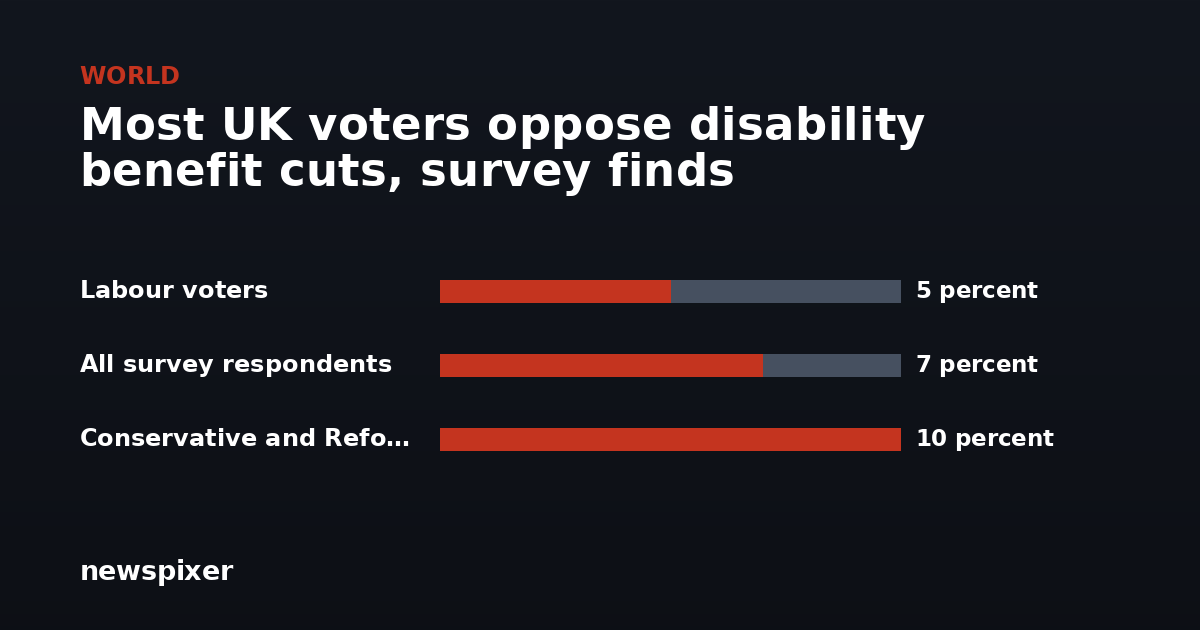
| Support for cuts | 7% of British survey respondents favor reducing disability benefit spending |
|---|---|
| Support for increases | 49% of respondents say disability benefit spending should be increased |
| Conservative & Reform voters | 10% support cuts, while 40% favor more spending for those unable to work |
| Survey sample | 4,656 people interviewed across the UK between August and October 2025 |
Only 7% of British adults support cuts to disability benefits, while nearly half favor increasing spending, according to the latest British Social Attitudes survey. The research indicates that proposals to restrict welfare support for disabled people carry significant political risk across all major party affiliations, including Conservative and Reform UK supporters.
Broad Opposition Across Political Lines
The survey of 4,656 people conducted between August and October 2025 revealed that 49% of respondents believe spending on personal independence payments (PIP) should rise. Resistance to benefit reductions remains high across political divides. Among Labour voters, 57% supported higher spending and 5% backed cuts. Among Conservative and Reform UK voters, 40% supported increased spending for claimants unable to work, compared to 10% who favored reductions.
Robert de Vries, a senior lecturer at the University of Kent and co-author of the report, stated that “support for disability benefits remains remarkably strong” despite growing political divisions on broader welfare spending. The report noted that while overall support for welfare has declined in recent years, disabled individuals continue to be viewed by the public as among the most deserving of state support.
Public Perceptions and Specific Conditions
The report highlighted that public backing for disability support varies depending on the specific condition of the claimant. Informal public hierarchies tend to view physical disabilities, such as those requiring a wheelchair, as more deserving of support than mental health conditions like depression and anxiety.
Furthermore, public opposition to spending cuts often intensifies once specific details emerge regarding who will be affected and how many individuals could face financial hardship. The report’s authors concluded that ministers face a difficult task, noting that proposing reductions in this area represents challenging terrain for building public consensus.
Pending Government Reviews and Political Pressure
The findings arrive as the UK government prepares to release two official reviews examining welfare expenditure. A review of PIP led by former welfare minister Sir Stephen Timms published preliminary findings in July, stating that the benefit—currently claimed by nearly 4 million people in England and Wales—requires reform to ensure financial sustainability. A second review, led by former Labour MP Alan Milburn, focuses on employment support for nearly 1 million young people aged 16 to 24 who are not in education, employment, or training, raising concerns over potential spending limits for younger claimants.
Opposition parties have pushed for deeper cuts, with the Conservatives previously launching a review aimed at saving £23 billion and Reform UK suggesting cuts to PIP could yield up to £50 billion in savings. However, the British Social Attitudes report noted that while disability benefit costs have increased, overall welfare spending has remained flat, suggesting that claims of an unsustainable system may be overstated. The government previously reversed a planned £5 billion reduction in disability benefits last year following public pushback and parliamentary opposition.
Background
The British Social Attitudes report has tracked public opinion across the United Kingdom since 1983, measuring trends on taxation, social spending, and state policy. Personal independence payments (PIP) serve as the primary financial assistance mechanism for extra living costs incurred by individuals with long-term physical or mental health conditions or disabilities in England and Wales.


Leave a Reply